Level Design
Voxray Games afforded a large degree of autonomy to its designers, so I was encouraged to own the entire experience of my levels from beginning to end. Here is a brief overview of one level called McAbre.
Overview
The player inherits an abandoned, possibly haunted, manor on a remote island. They are tasked with clearing the mess, repairing the structure and redecorating it for a hotel company to take it over.
There was intention from the lead designer to move away from traditional combat and exploration into something more creative. The success of titles like Powerwash Simulator & Viscera CleanupDetailmade me confident that this idea had an audience.
Concept and Planning
Broad strokes. I had some big ideas floating around that I narrowed down into actionable design goals.
A large mansion, isolated from any other NPCs or civilization.
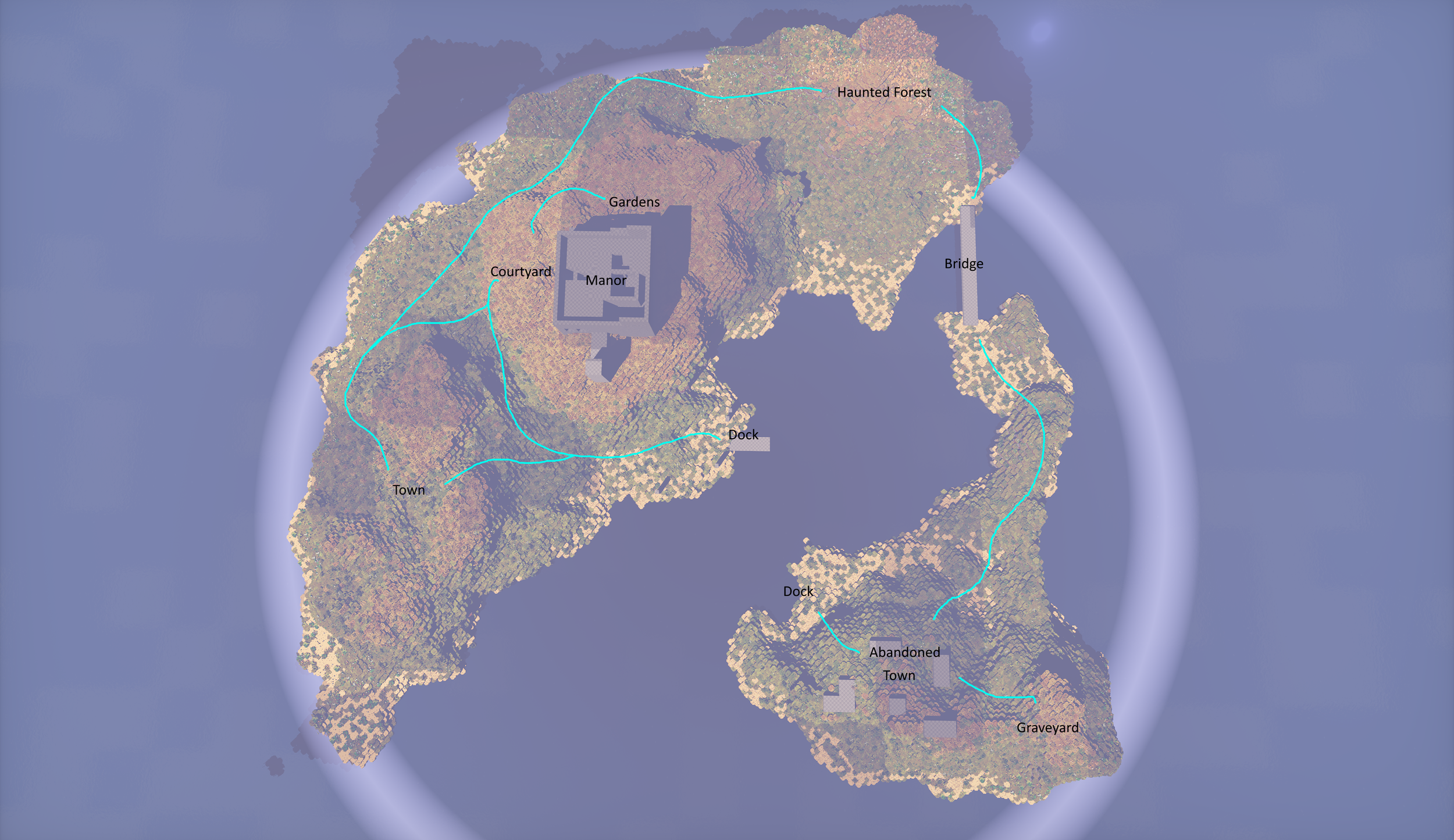
A long (initial) walk to the mansion, to build suspense and set up the world of the level.
But with a shorter way back (sailing dock-to-dock) to ease the pain of needing to return to town.
An nearly-abandoned town to greet the player with:
A limited number of key characters.
Narratively appropriate areas for merchants and tradespersons.
A sense of foreboding and anticipation.
Space to hunt monsters and crafting supplies for the second act of the level.
I envisioned the act structure of the level as follows.
Act I
The player meets Wendell Nouveaux (guide character) and receives the call to action. They journey to the manor.
Act II
The player cleans up and redecorates the manor with new furniture and decor.
Act III
The player must devise a strategy to fend off the approach of the legal owner of the manor and uncover the mystery of its abandonment fifty years ago.
In practice, these key points blended together at the joins somewhat, but this structure remained mostly intact when we shipped.
Blockout
The Manor
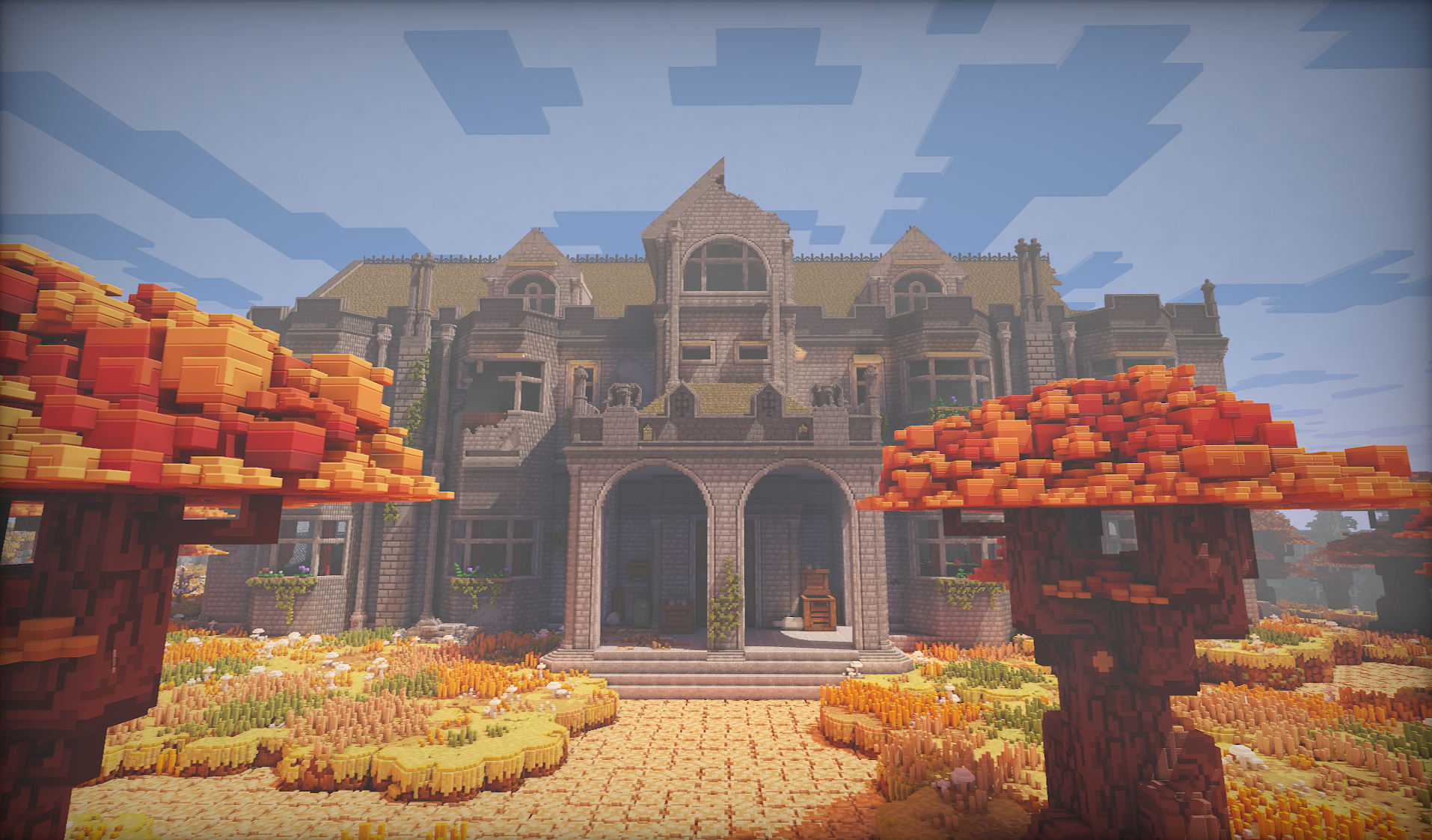
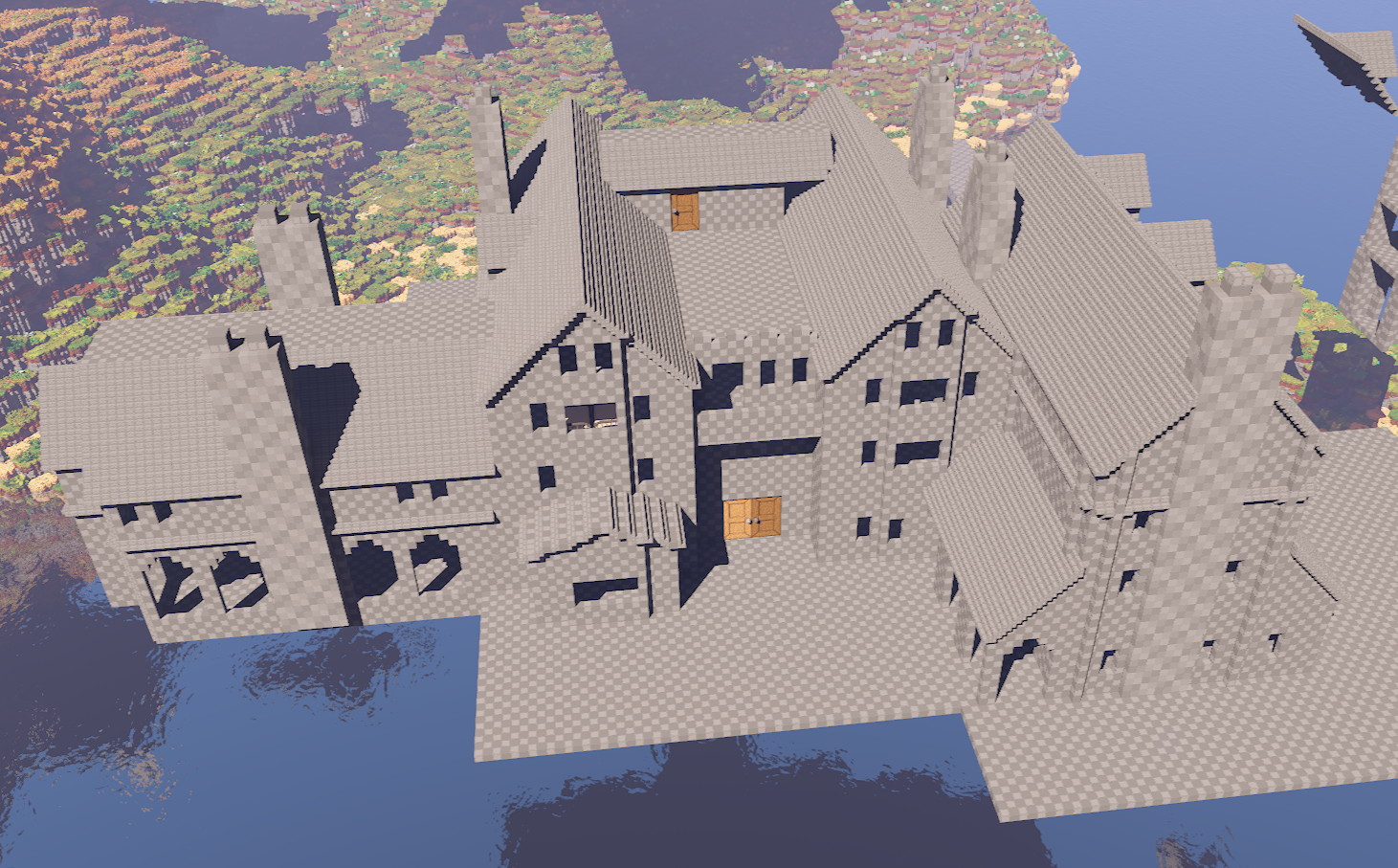
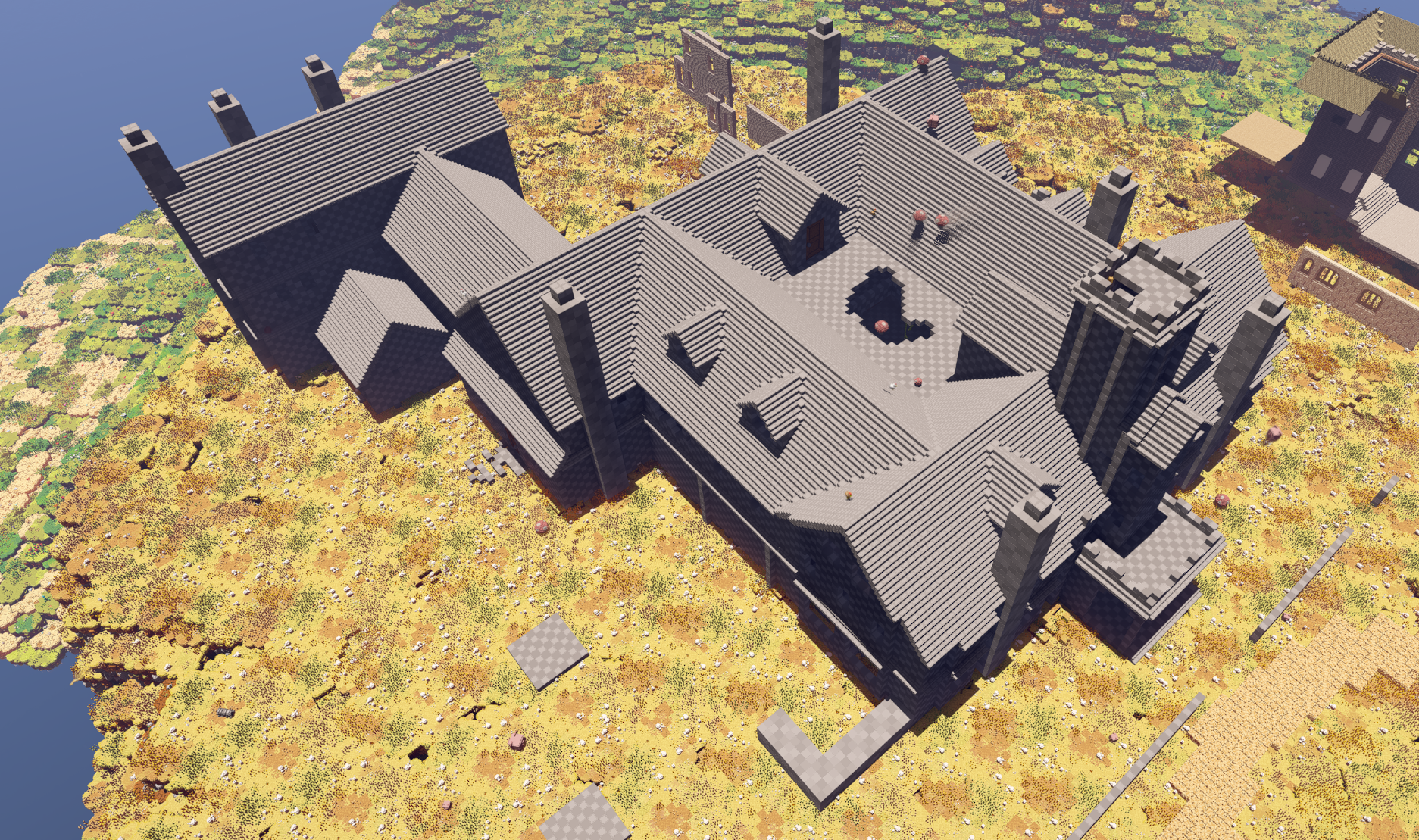
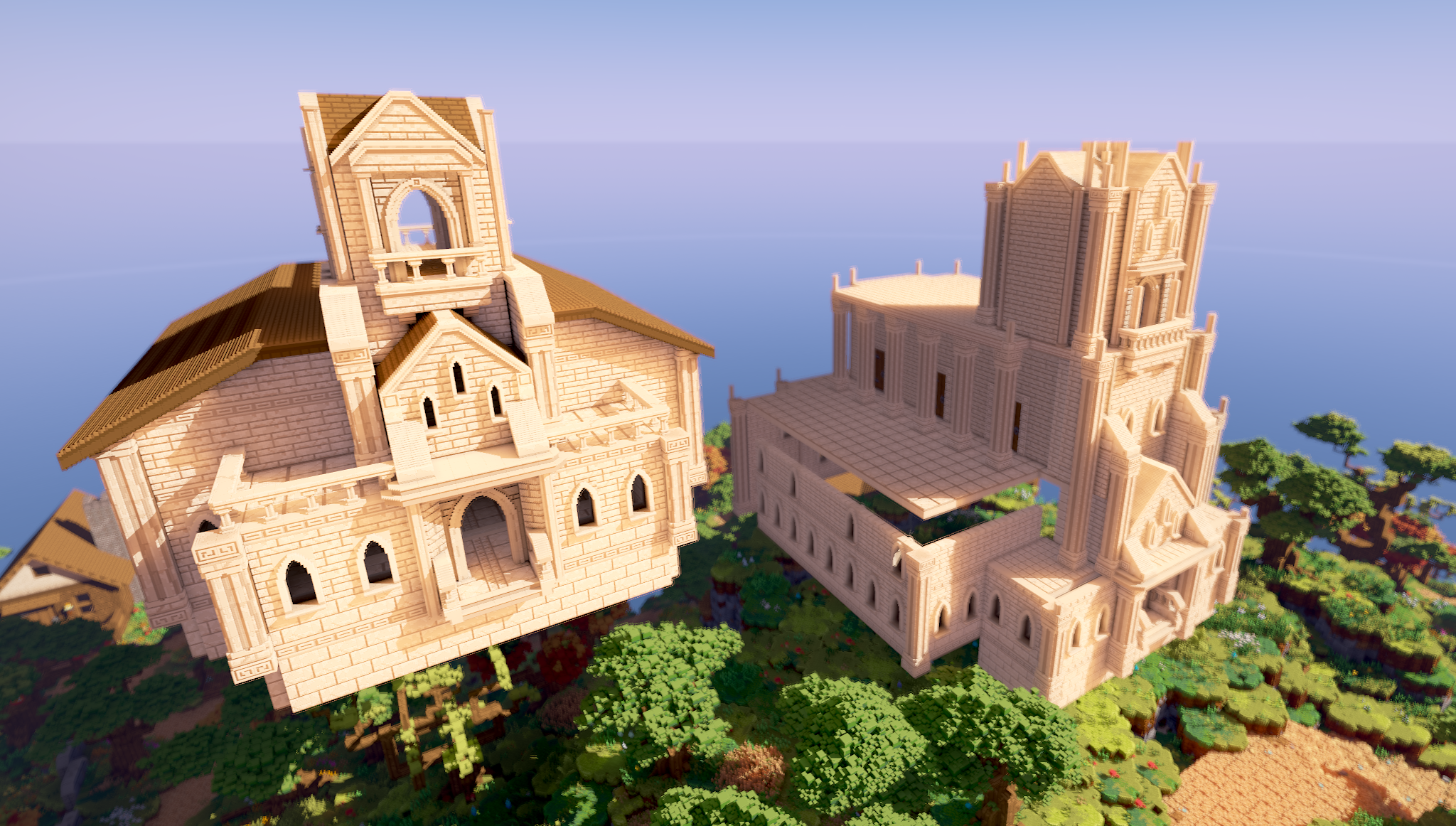
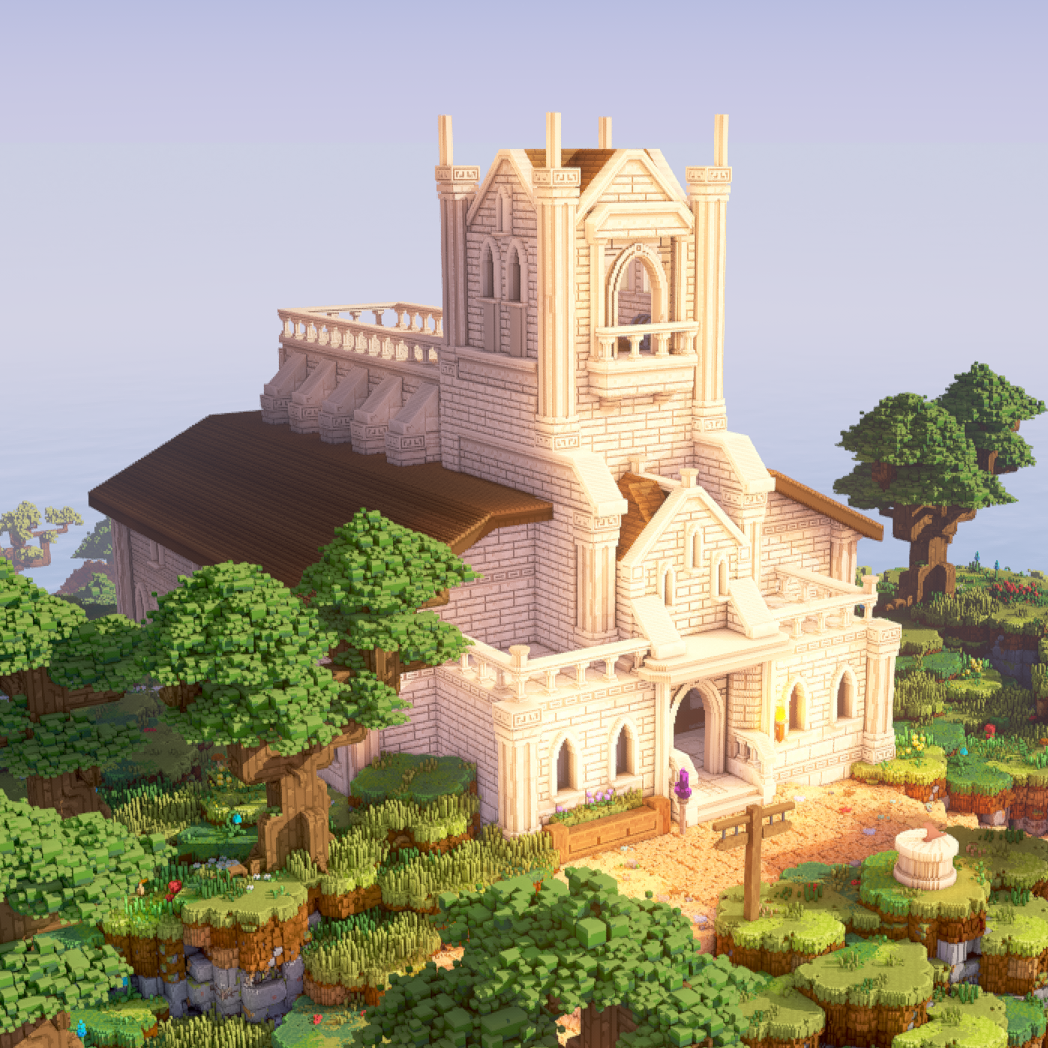
Blocking out McAbre Manor took a number of iterations. I was keen to make the place feel like it could have been a real house at some point, so I tended to steer away from overly “haunted house” designs. I ended up pulling reference from a number of real-life manors around the UK - Chilston Park, Norton House and, primarily, Heath House.
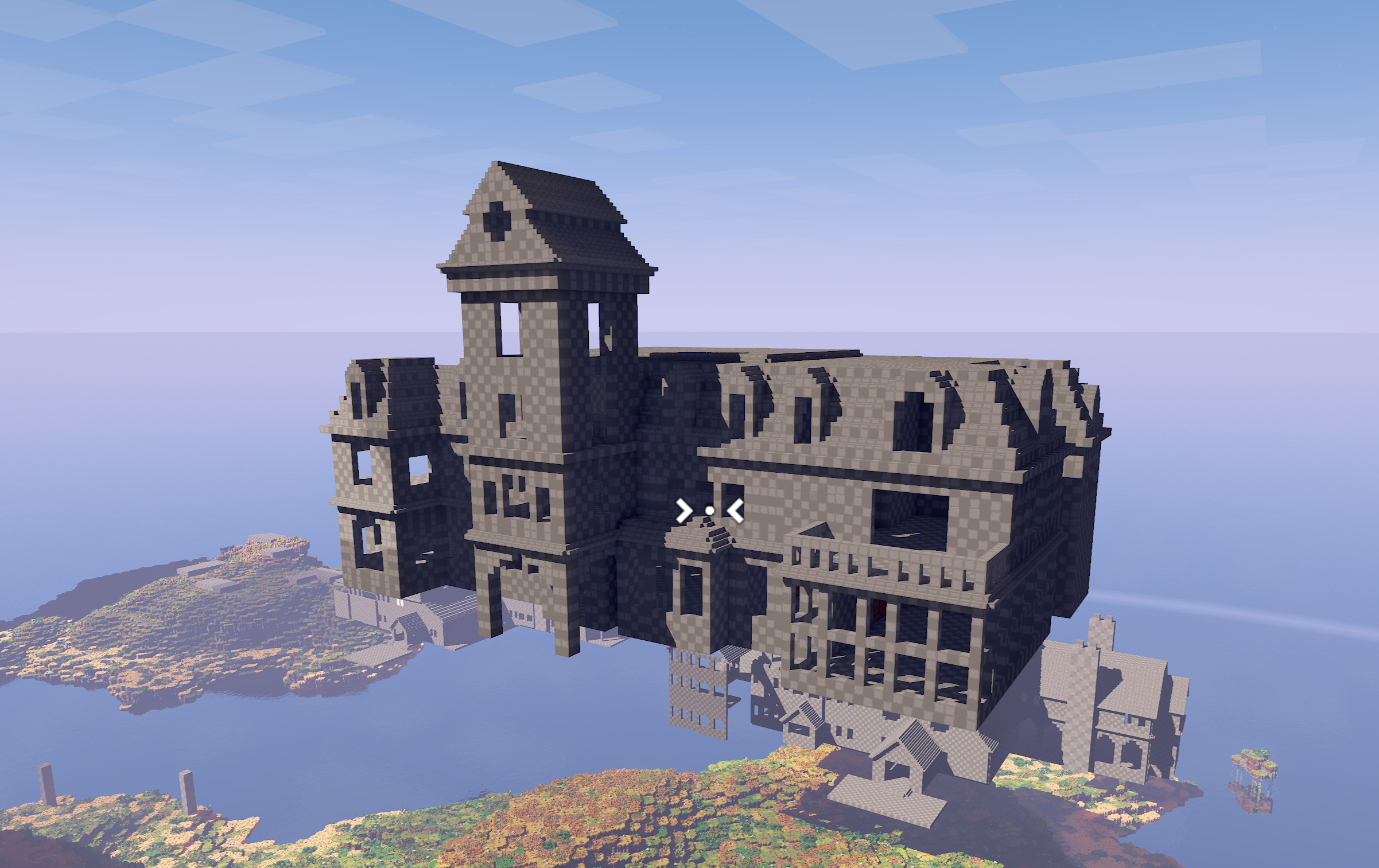
Too Addams Family, and I lacked the experience with the American Gothic tradition to do justice to this style.
Too big, I spent too long justifying the size and number of my rooms that it felt like a WoW-scale castle, instead of an intimate haunted manor.
The Town
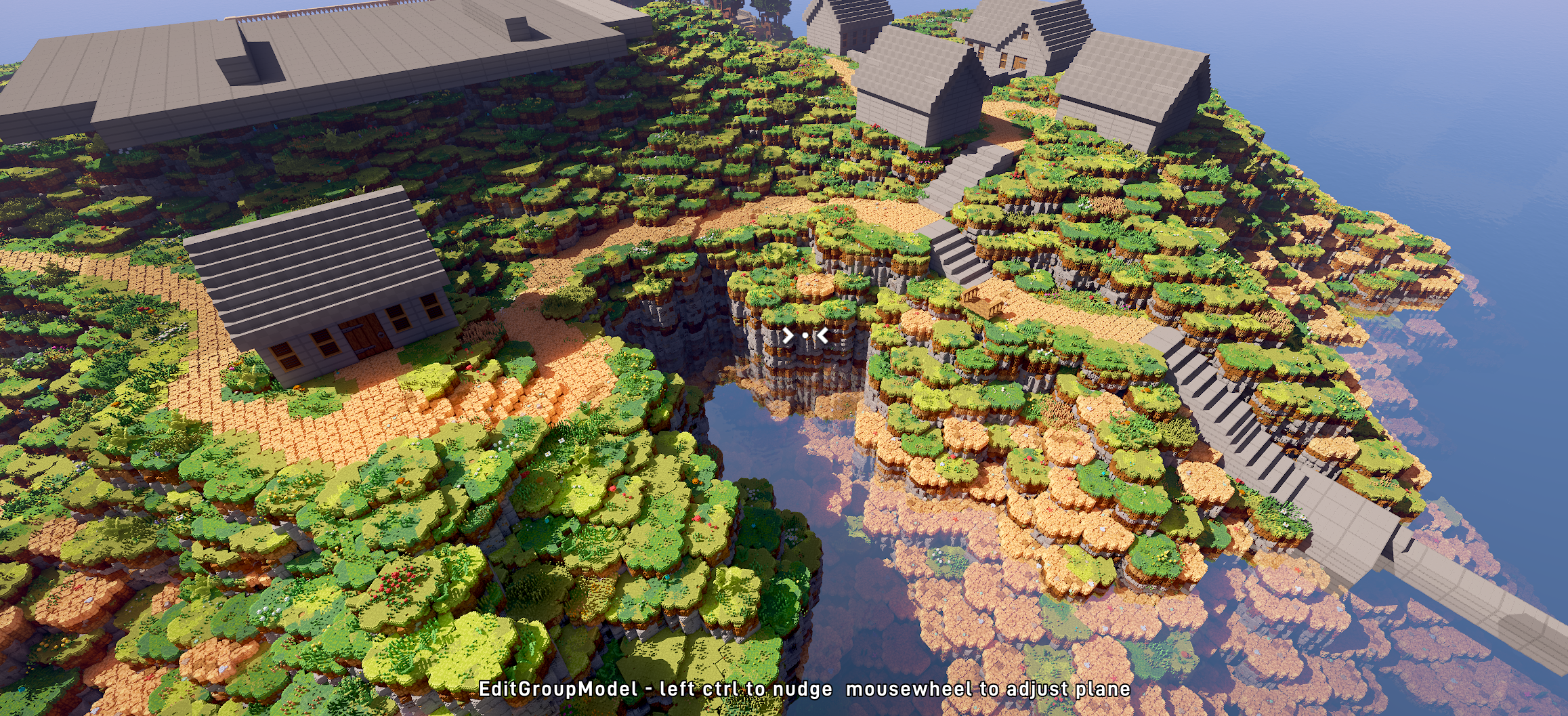
The blockout of the town was important because it was where the player started their journey. I wanted to withhold the reveal of the manor, and emphasise its mystique with this design. It also had to include space for a food merchant, a furniture maker, a weapon seller and space for any side quests. Any unused structures could be made to look abandoned, and the narrative consistency of the area would be preserved.
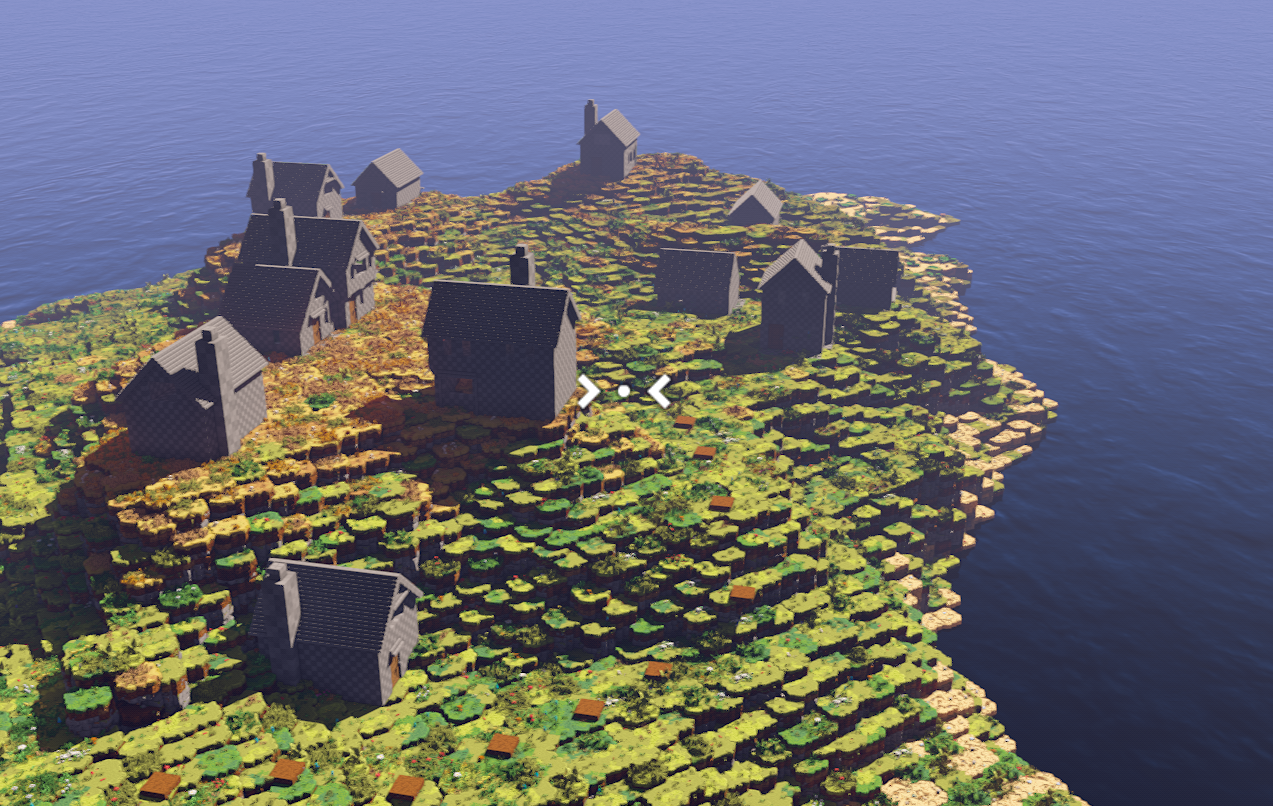
My initial intention of a sparse remote village - given its openness- felt too un-mysterious, and I struggled to motivate movement through the space.
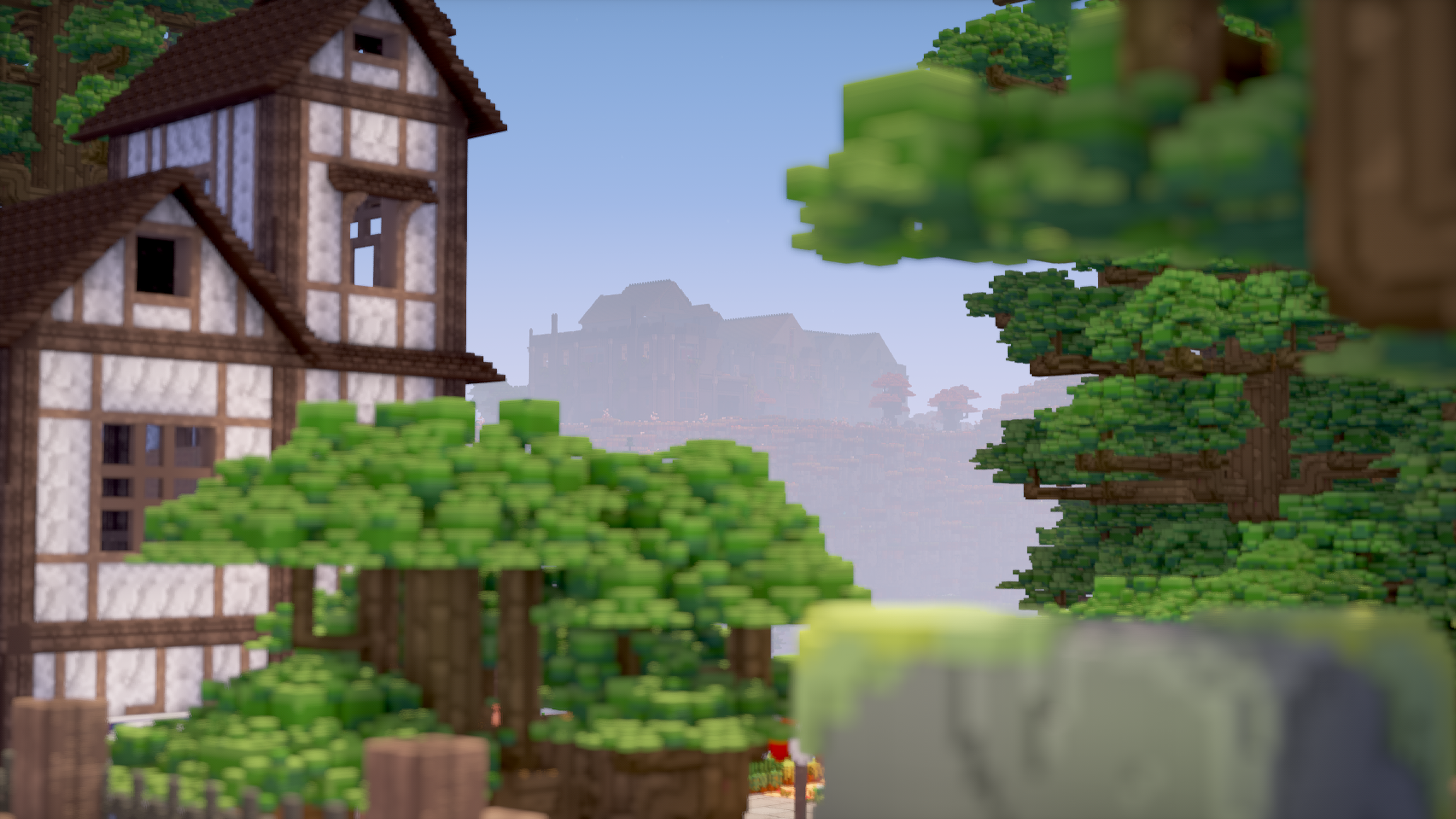
From a distance, it was important that McAbre Manor cut an impressive silhouette over the town…
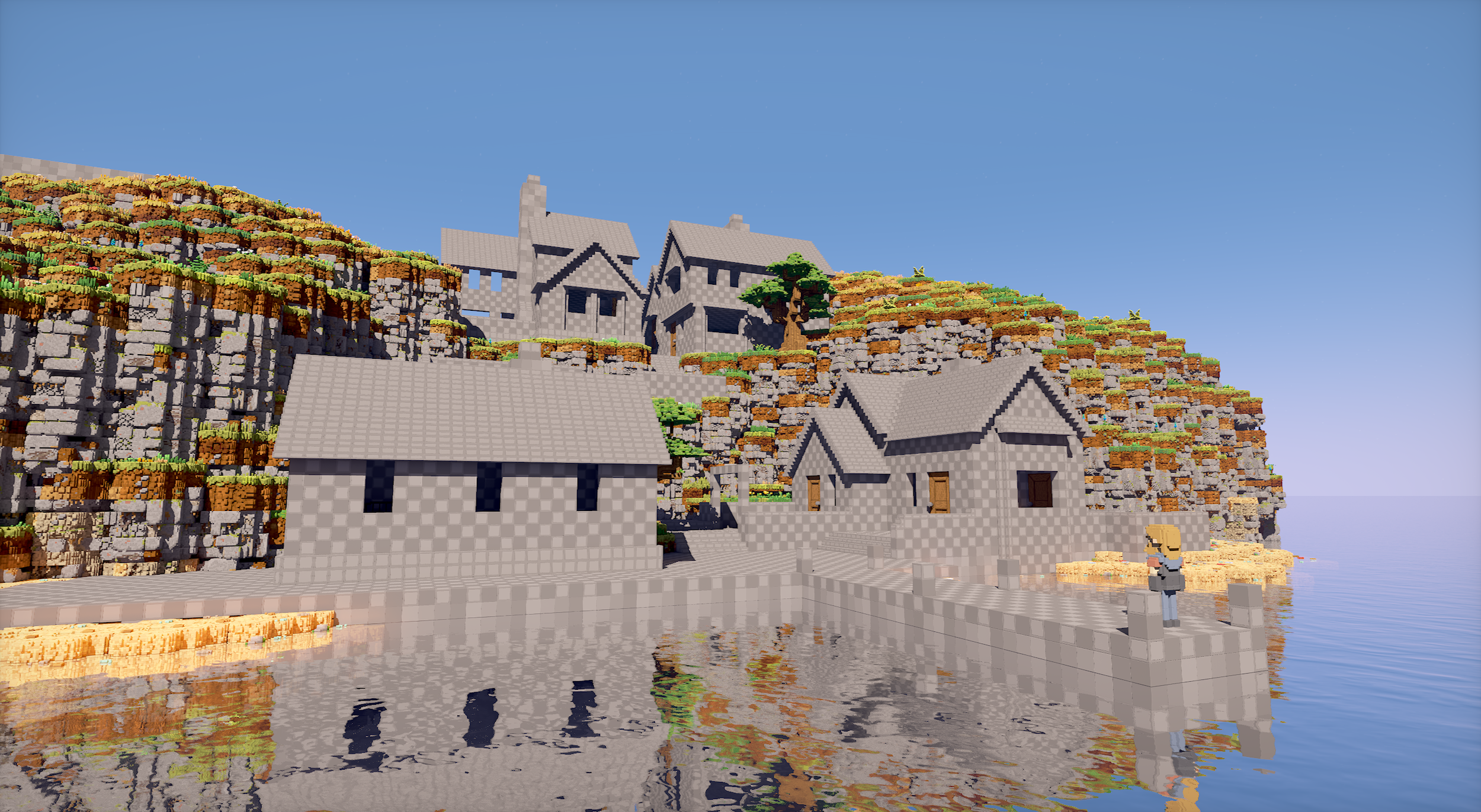
My next idea involved “hiding” the town centre behind a ridge, which built anticipation and made movement through the space feel more exploratory.
Environment Art
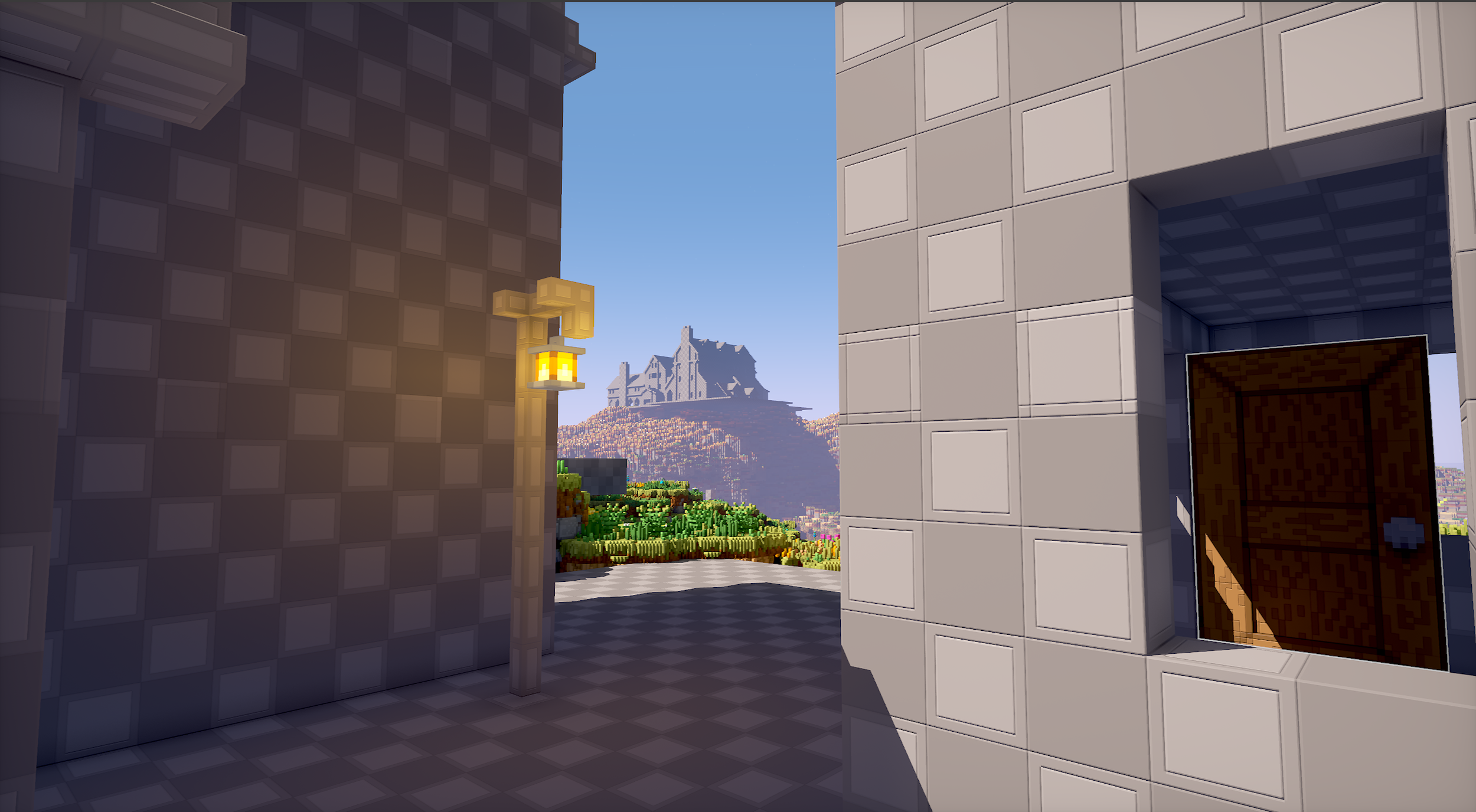
This new, tighter design meant that I could subtly guide the player to this imposing view of the manor, emphasising its looming presence.
I held fairly close to my reference for the manor. Inspired by British mansions, I opted for muted grey for the brickwork, and injected colour where I could.
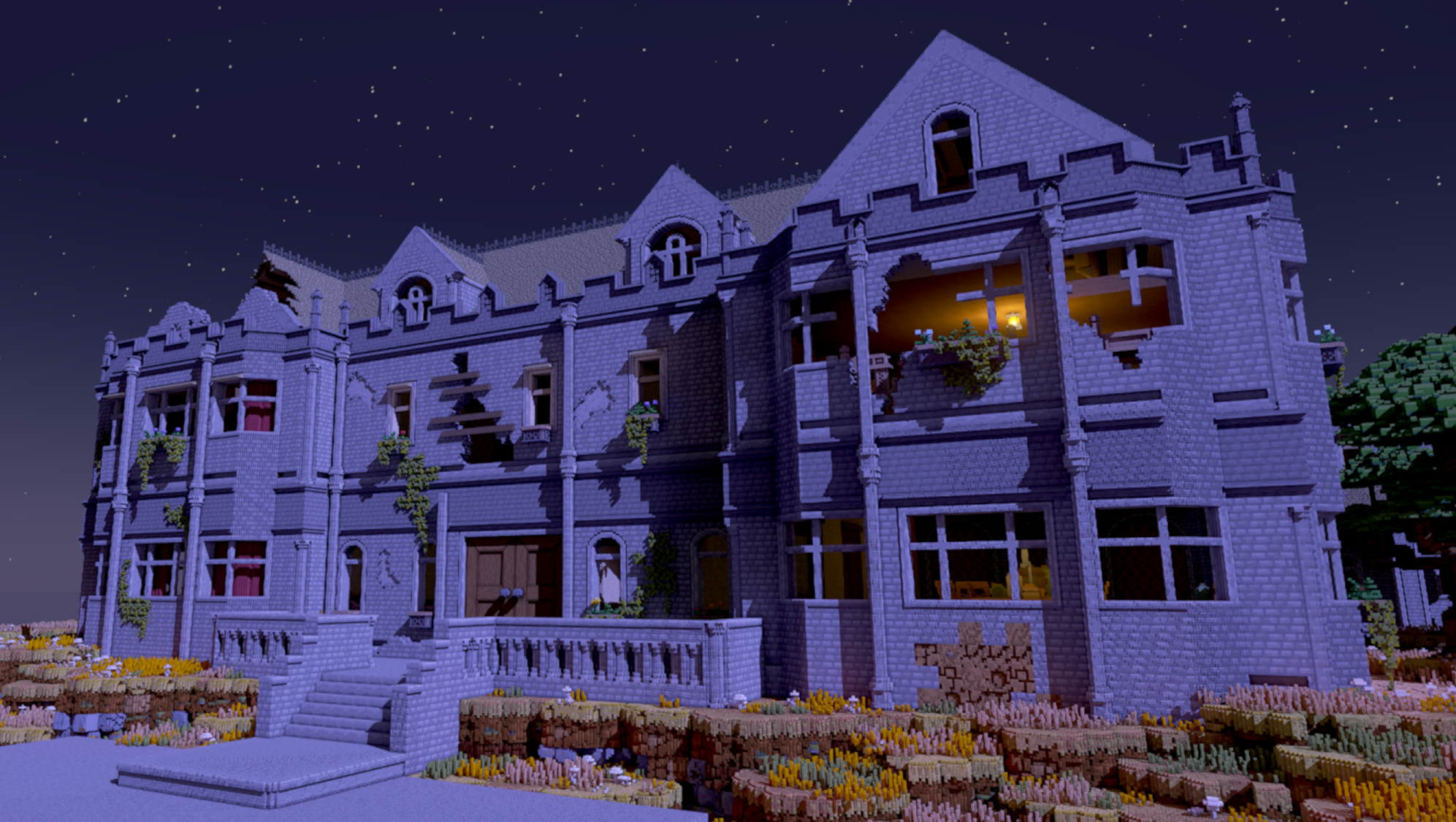
… but up close, the wear of age and the enormity of the player’s task becomes apparent.
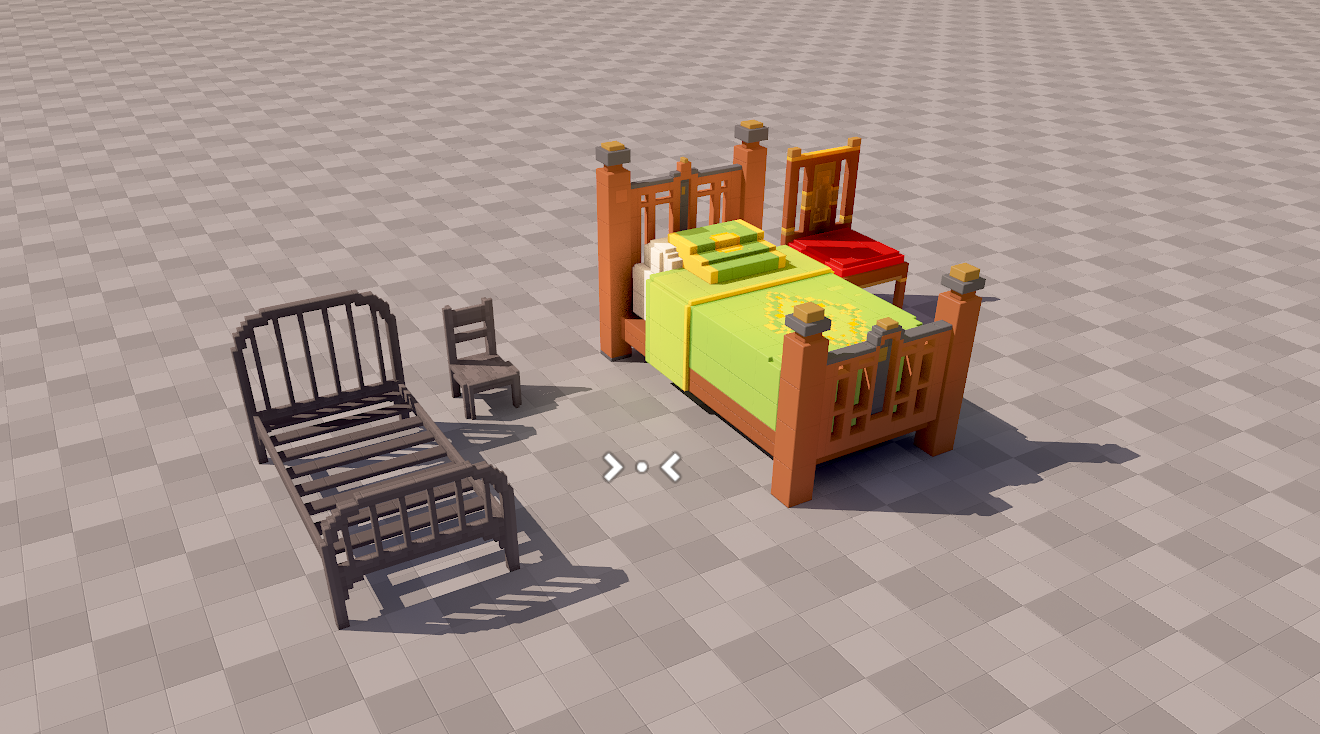
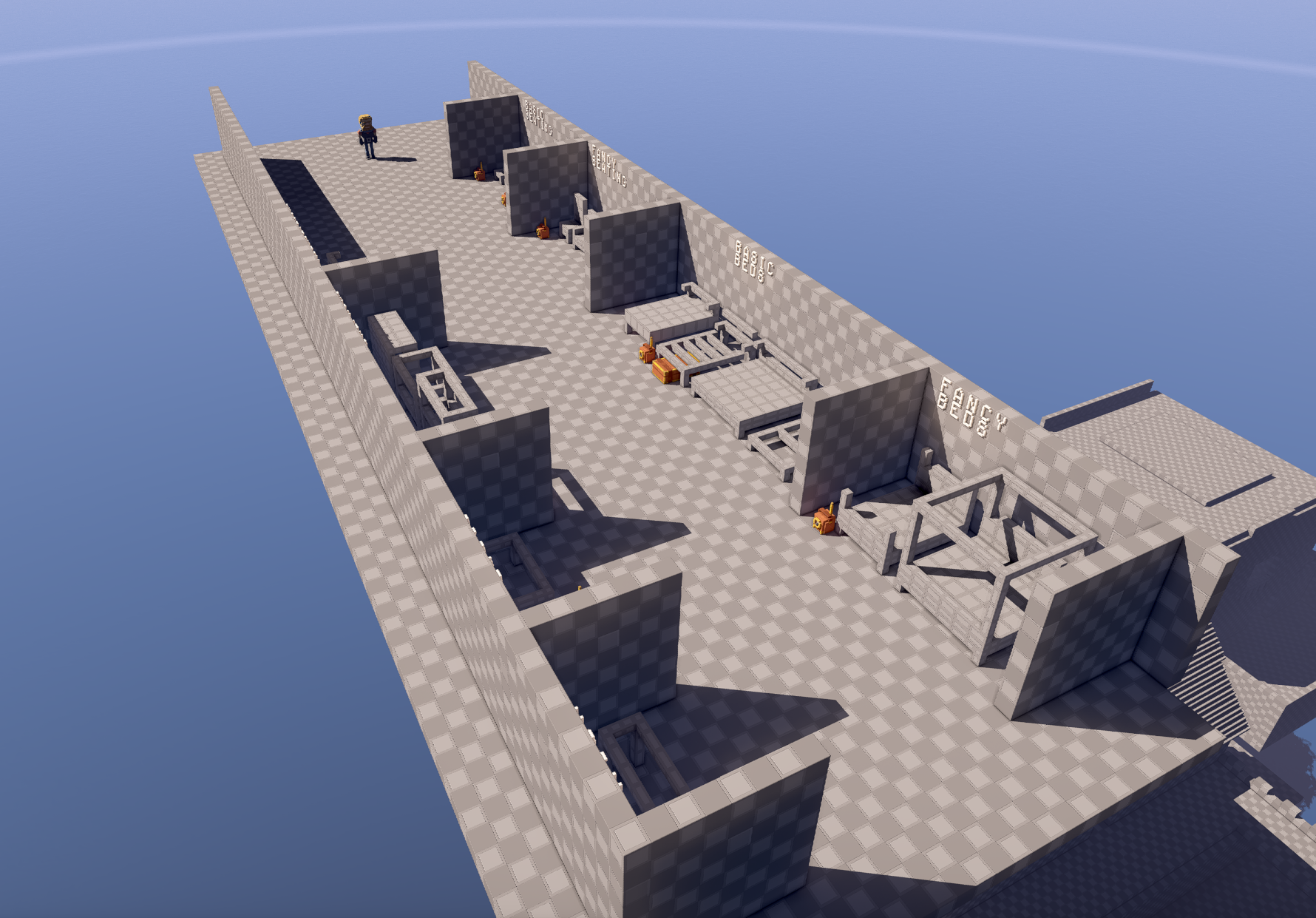
… with input from other level designers, I codified a set of metrics to standardise our furniture going forward.
I settled on this. Now only two storeys (+ attic), and a more realistic floorplan based around a central staircase.
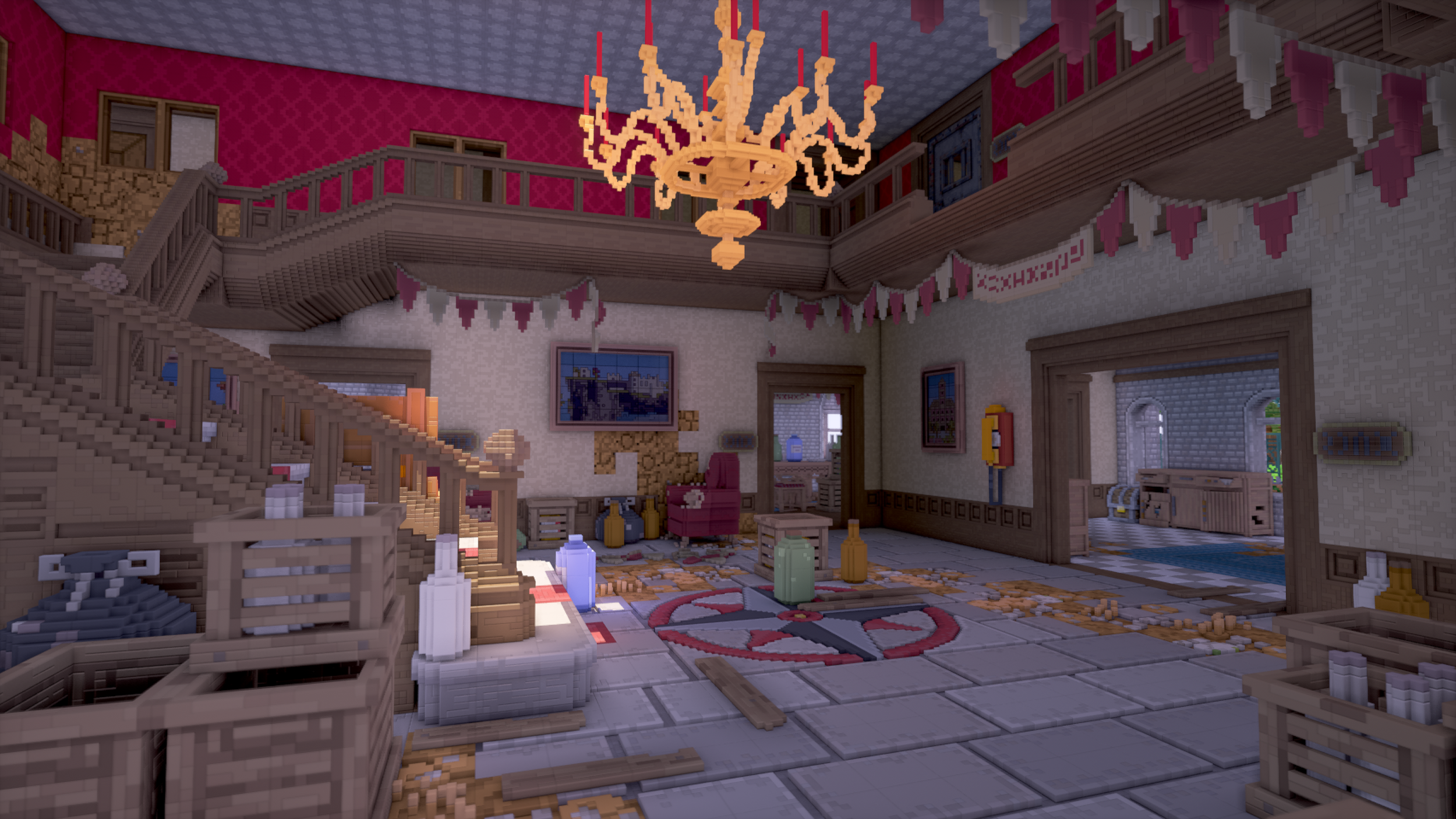
The interiors gave me carte blanche to sell the richness of its prior guests. Deep reds and browns, party decorations, a myriad of empty alcohol bottles.
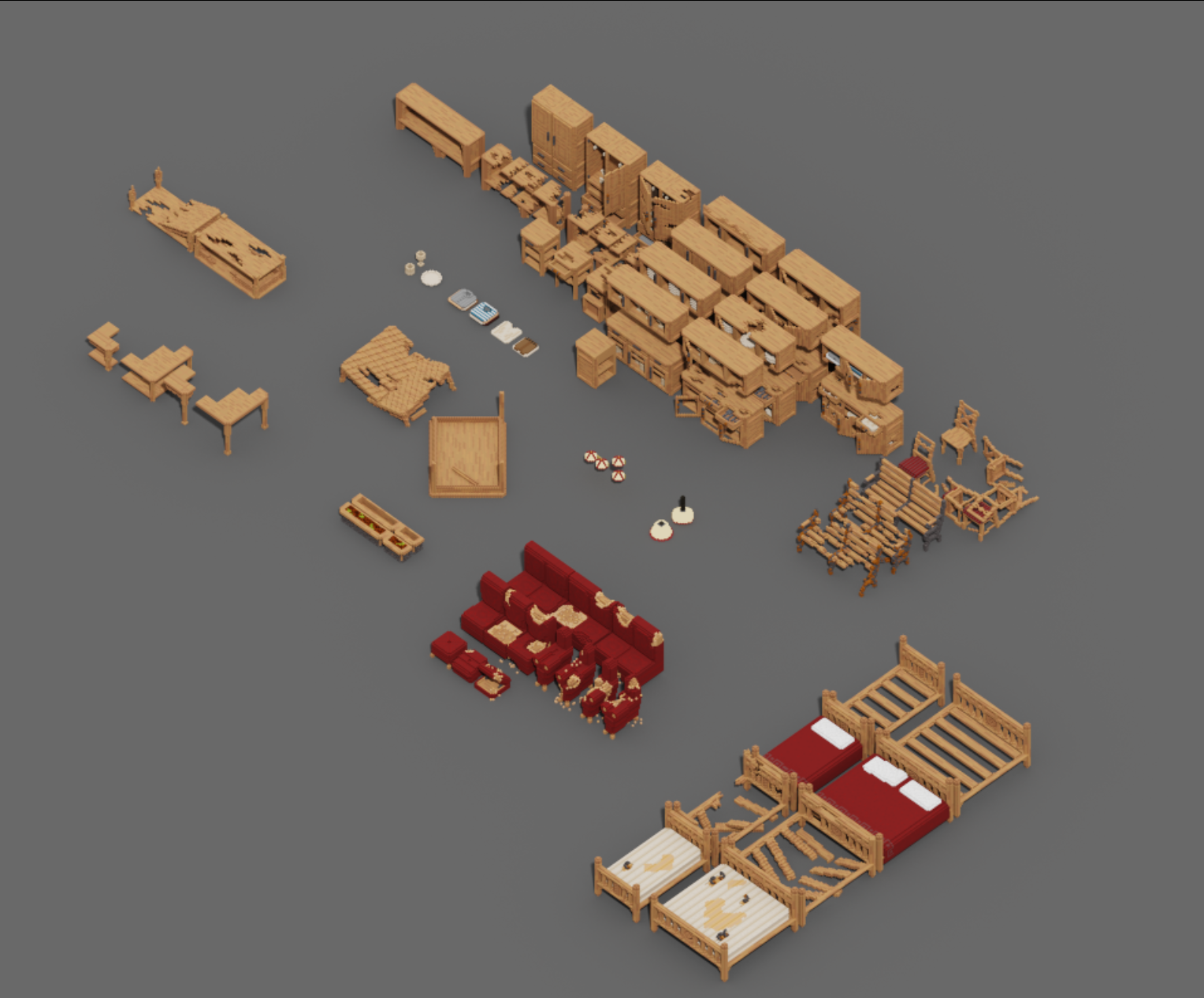
From these metrics, I was designed a modular kit of furniture assets, designed to allow for multiple furniture types and lots of damage.
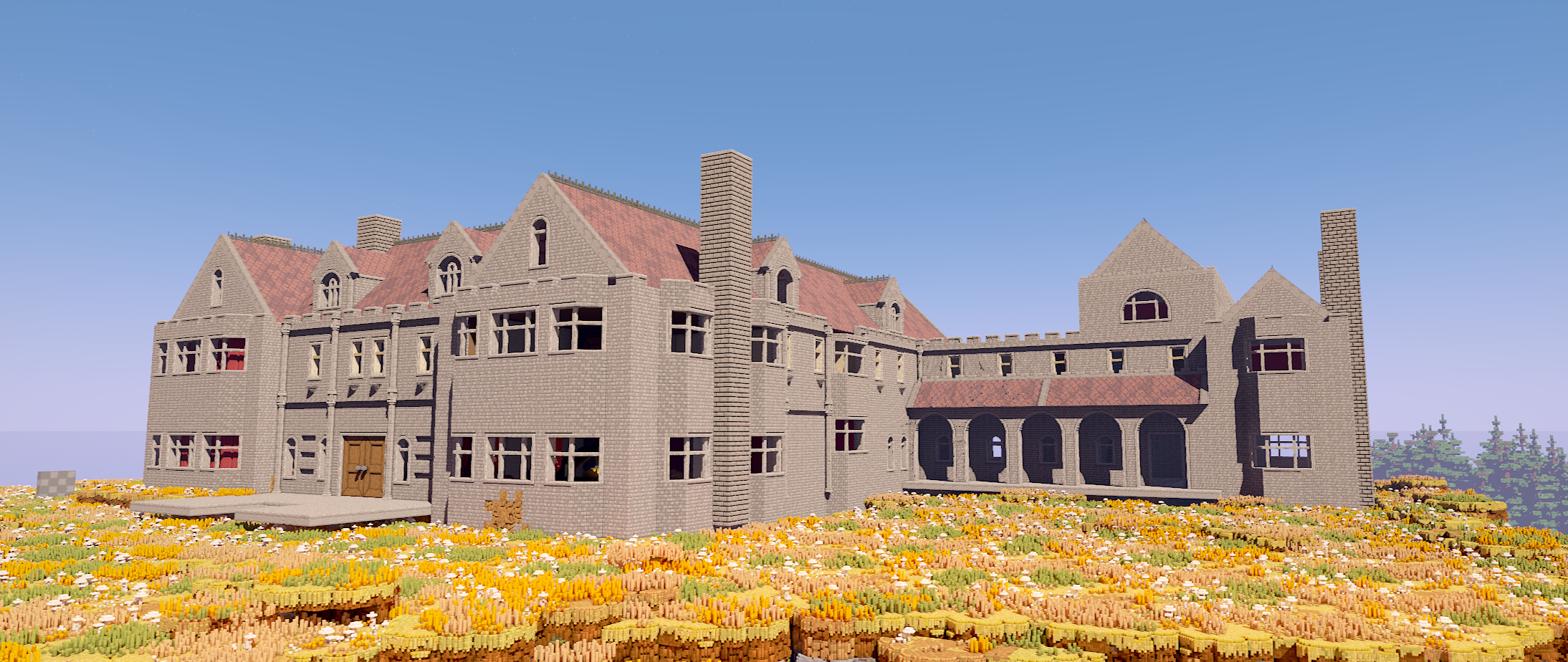
With basic architecture, the form of this building is clear and grounded in reality.
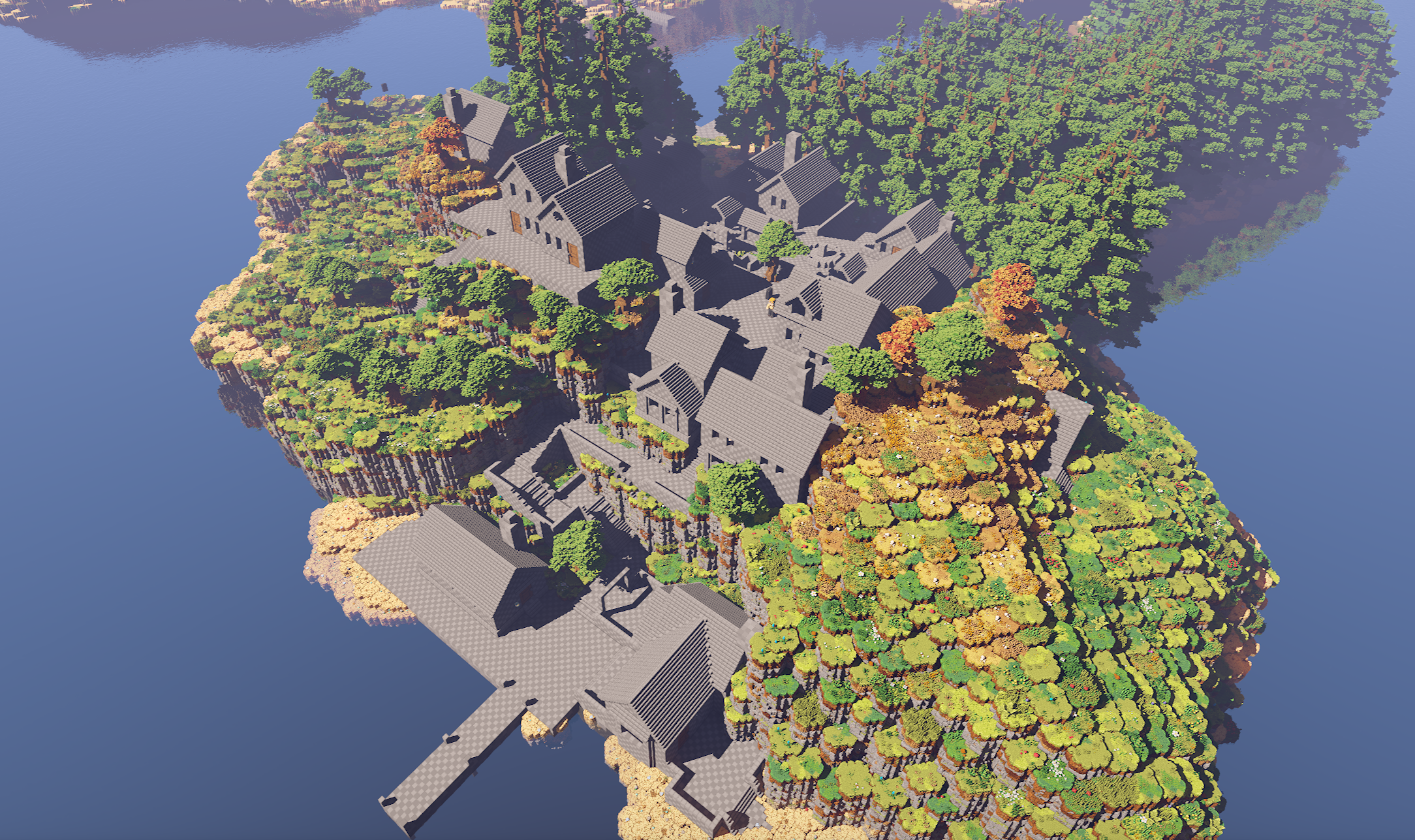
This ended up being the final design for New Forbode, and I was happy to move onto the next stage.
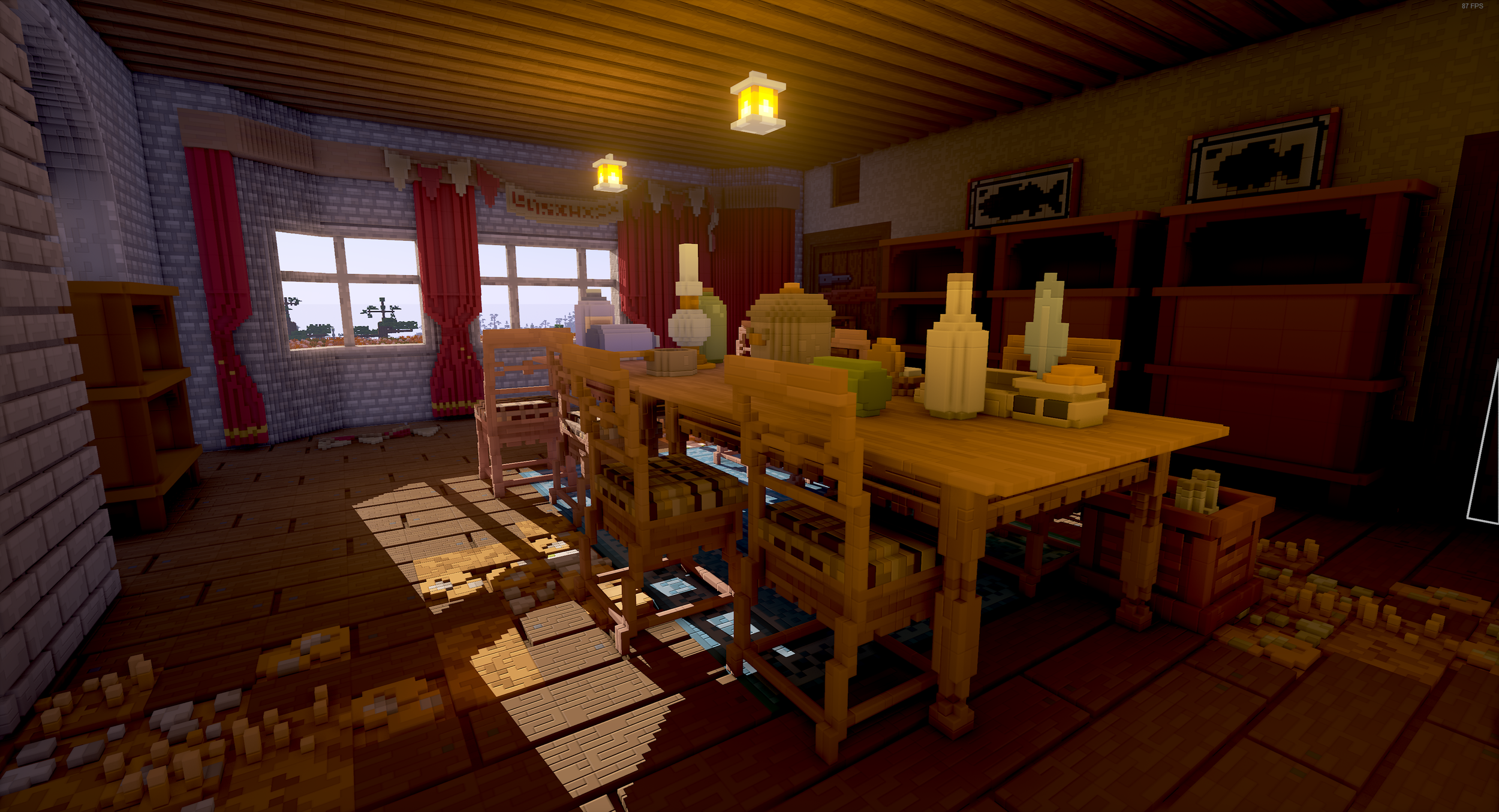
It also had to be obvious, from a gameplay standpoint, what was trash and what was treasure, so the player could clean, repair or replace as appropriate.
Given McAbre’s proximity to the beginning of a new development direction, lots of features and assets it required were not yet useable. This repairable furniture, a core tenet of my gameplay. I took ownership of the design and construction of these assets.
Props in Voxile had suffered from a lack of direction for a while, so first…
With the addition of material requirements saved out to a JSON file, my damaged furniture was repairable, as well as destructible.
The Isle of Vox (Tutorial Level)
The Isle of Vox was originally our free demo level for Steam Next Fest. It therefore had a number of objectives it needed to complete.
Approximate the full gamut of gameplay in the final release.
Tutorialise our main gameplay systems.
Combat
Ranged
Melee
Crafting
Destruction
Questing
Permit the player to solve quests non-linearly. Small-scale open world design.
Be immediately visually impressive.
Concept and Planning
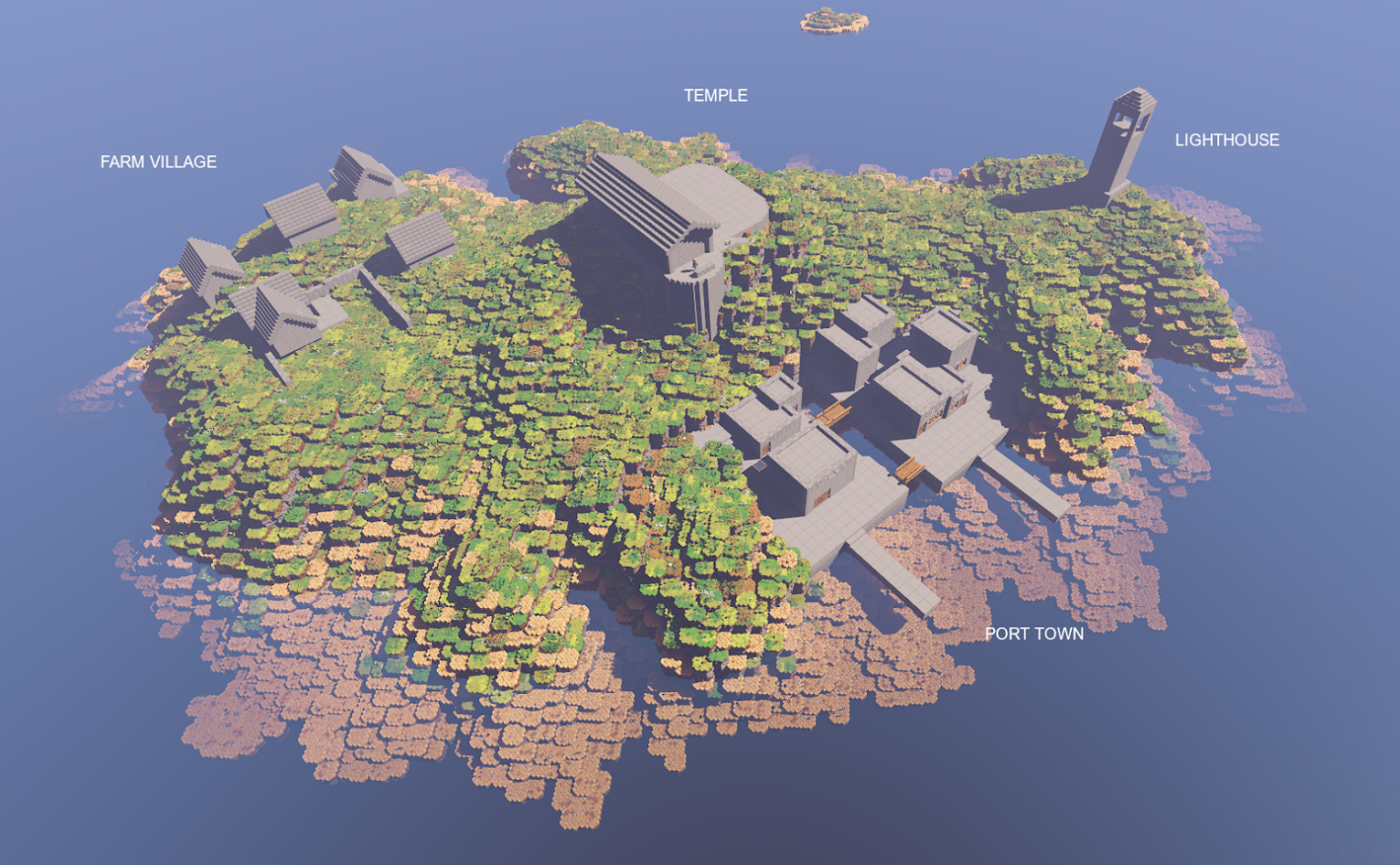
I based the layout of the level around a central weenie - in the form of a temple on a hill. By obscuring the lower areas from each other visually (Disneyland-style), I could sell a sense of scale in the world and preserve its navigability.
It had four distinct POIs:
A temple, high on a hill (The Holy Doma). The central weenie of the level, visible from all areas. A guiding landmark to aid navigation without relying on the minimap.
Port town (Flotsam Town). The starting area. Merchants and quest givers greet the player off the dock, and provide both context to players’ actions and reasons to explore the level.
The Lighthouse. Upon which sits the end-level portal. Designed and placed in such a way as to be immediately visible to new players.
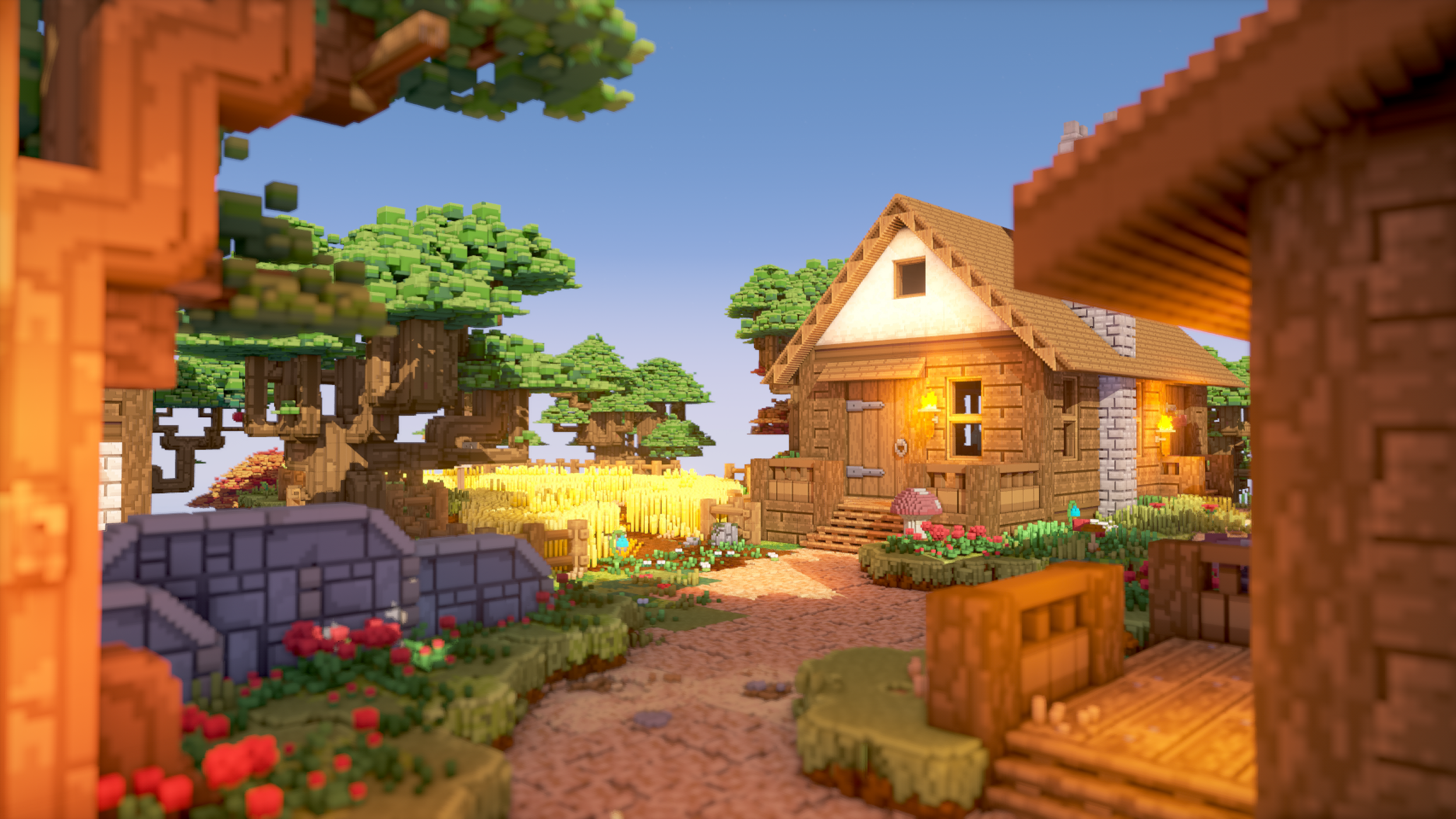
Farm Village (Chaffmore Village). An area obscured by trees and unknown to a new player. Designed and placed so as to tell the player that exploration in Voxile is rewarding and necessary.
Blockout & Quest Design
Flotsam Town
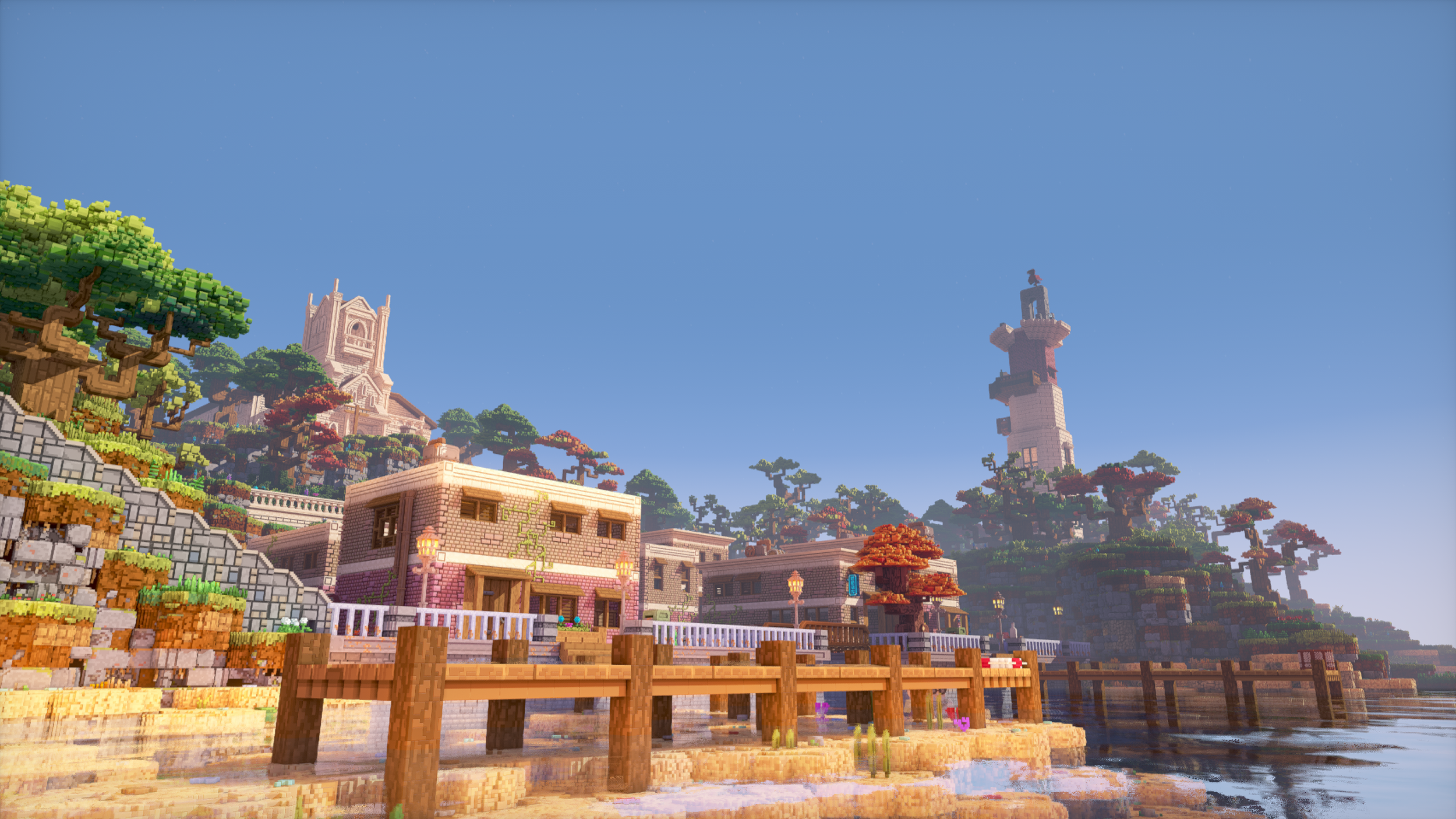
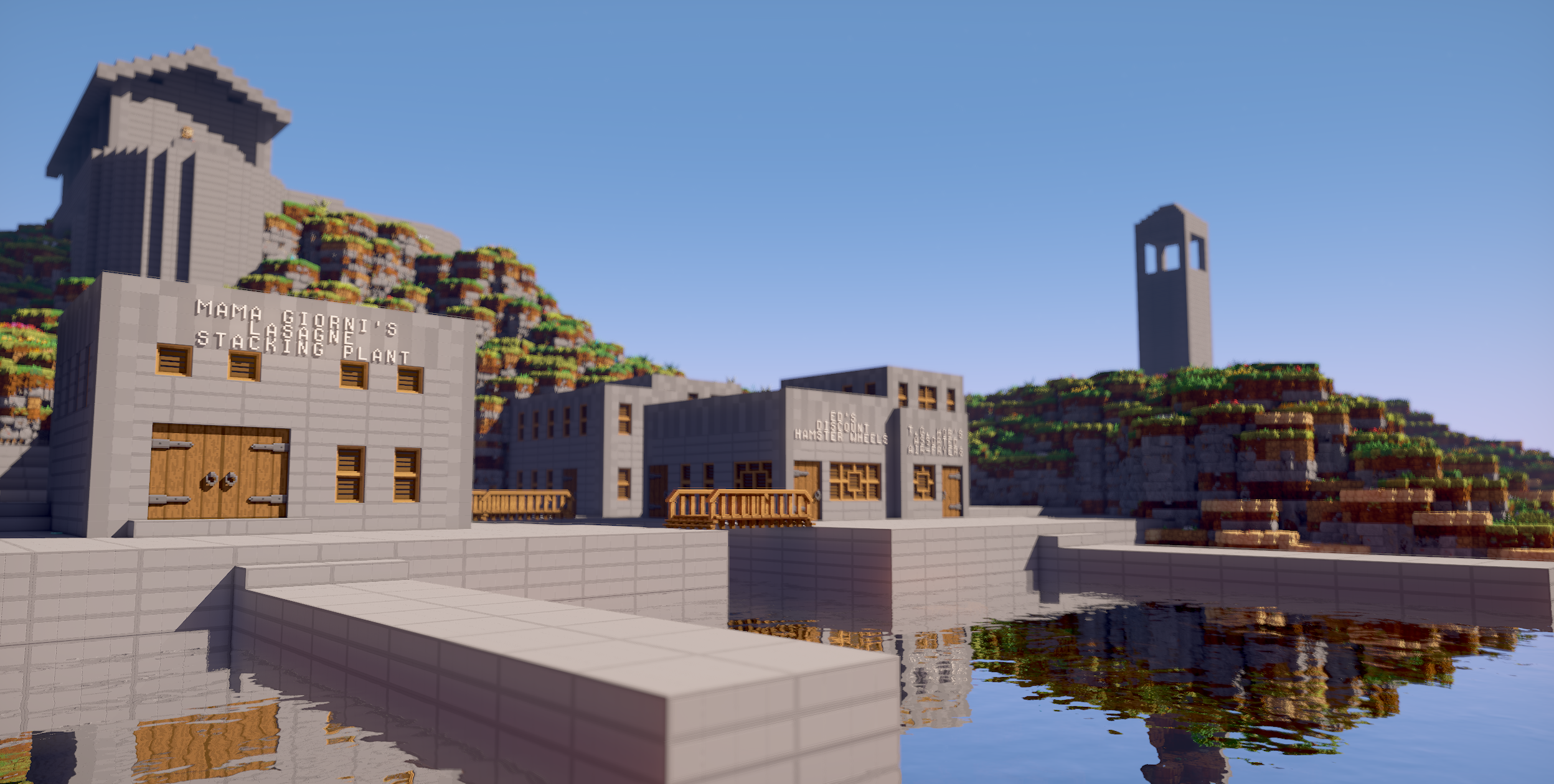
I wanted to ensure that the player’s initial tableaux included the lighthouse (end-level goal), the temple (eye-catching, highly vertical weenie) and the first quest giver(s). The screenshot of the blockout here was taken close to the player’s starting location, and reveals that by placing the intended first quest giver on the near dock, the player can immediately read the environment for interesting and helpful elements.
The Holy Doma
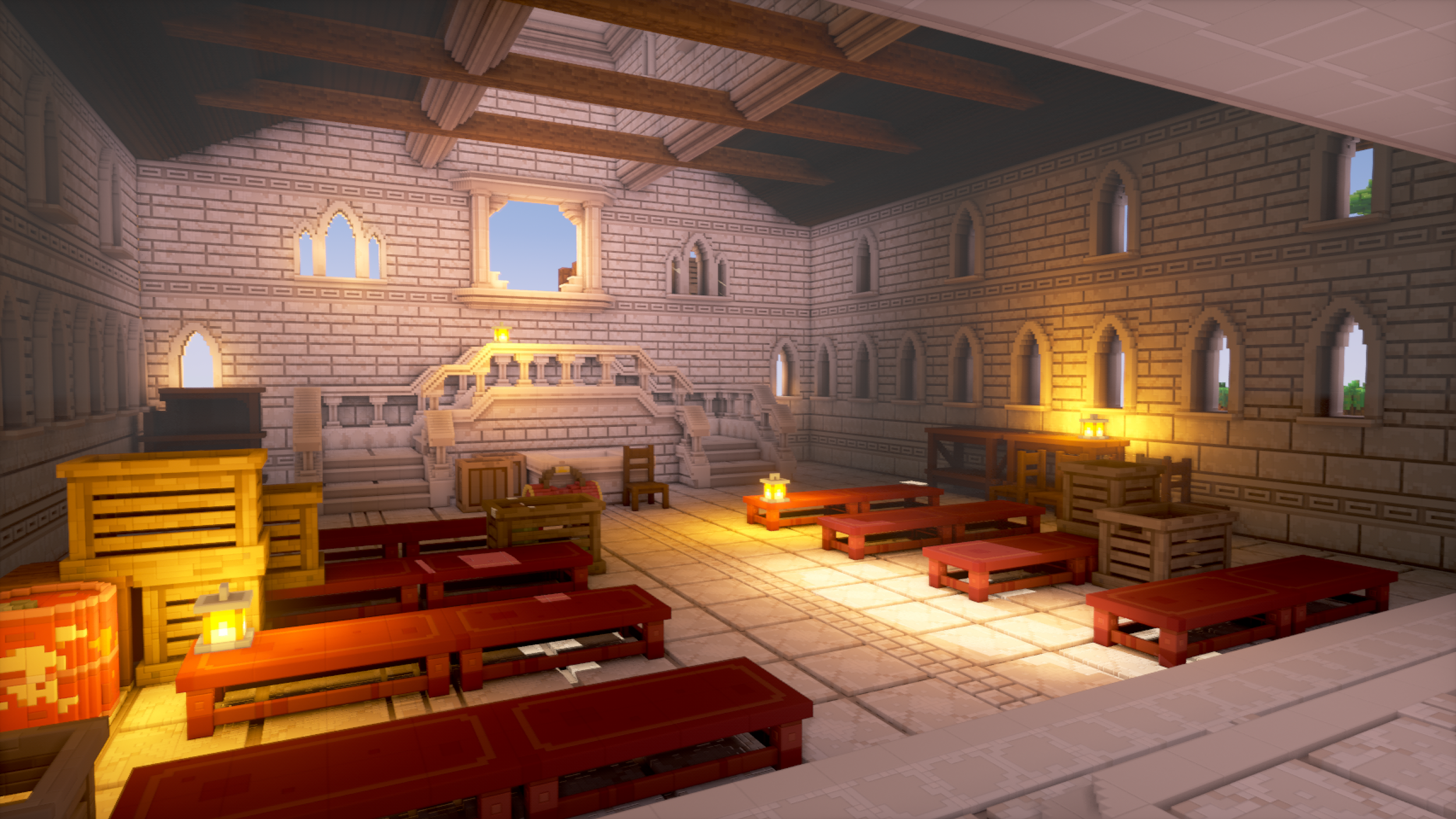
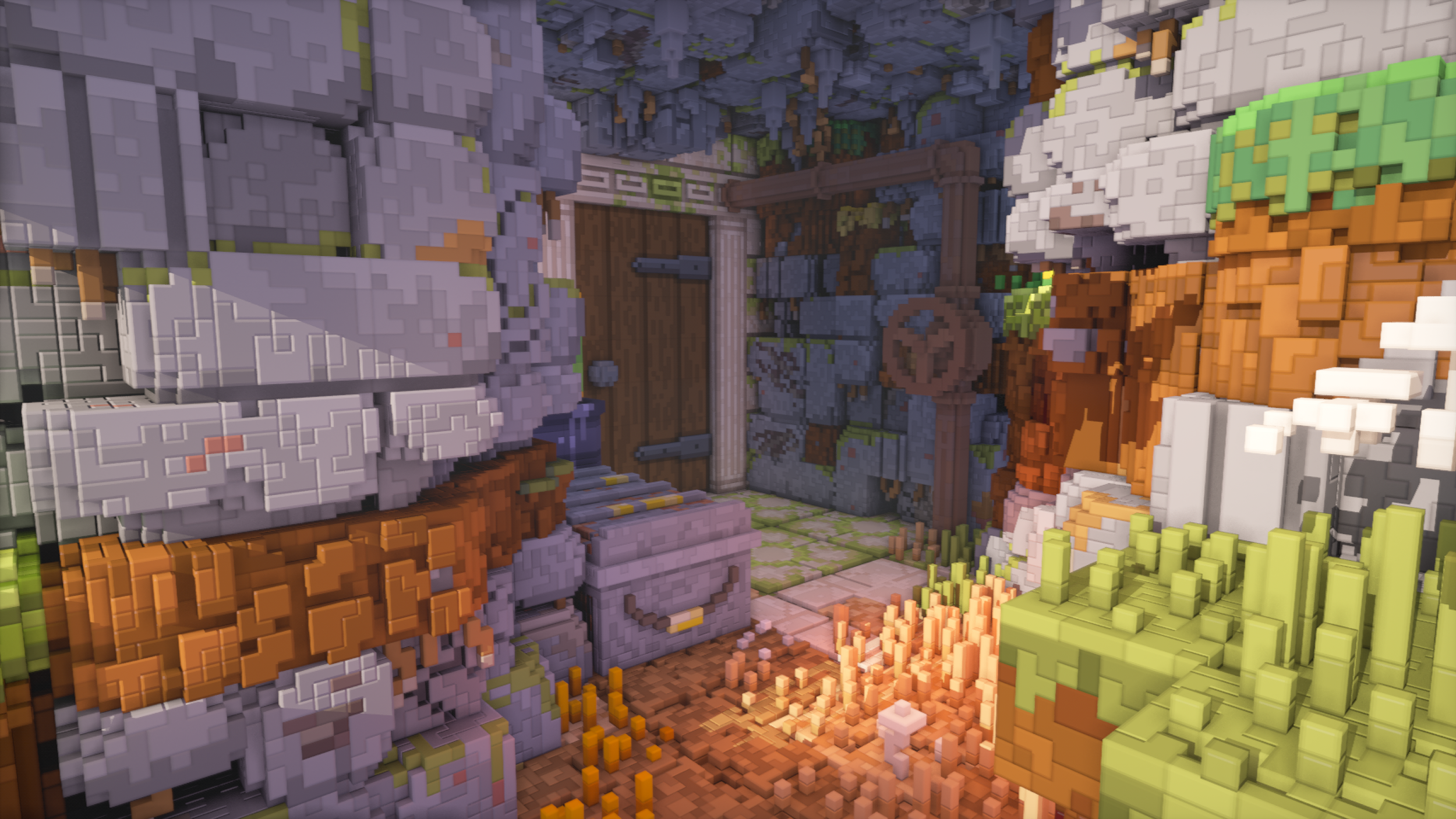
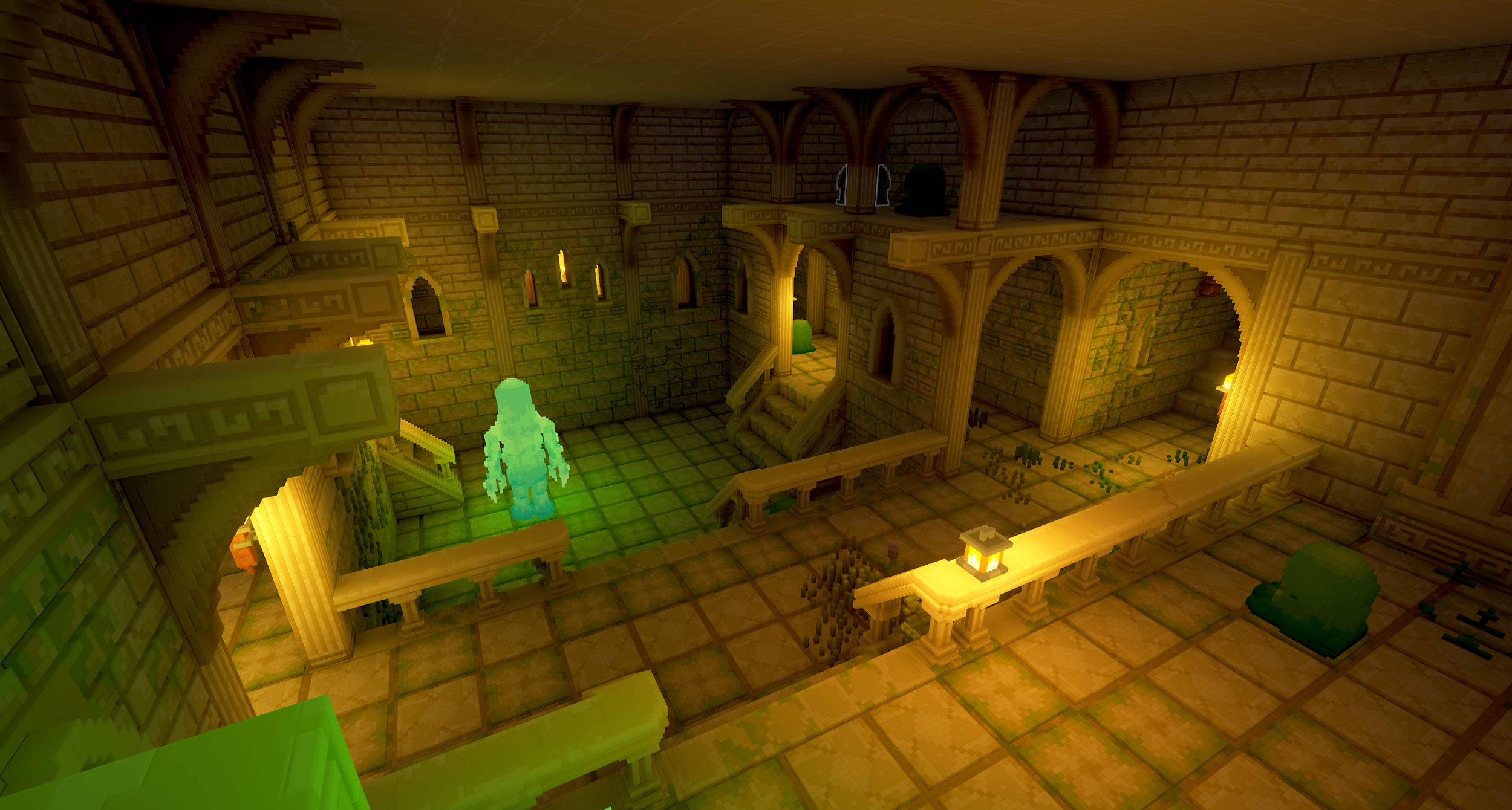
The central temple went through a number of iterations. Initially, it was a great looming pantheon, with a huge footprint. This proved to be too domineering on the landscape, and squashed the other POIs into the sea.
The final solution saw the footprint shrink by close to 50% and the overall height of the building (which I wanted to keep) reduced to a single tower. This maintained the presence of the building as a central focal point, but made for a more efficient use of space.
The Sodden Otter
This area was added late in production, as a solution to a handful of issues. It sits in the shadow of the Holy Doma, beside a cliff.
That quadrant of the map felt empty in testing.
Zazi needed somewhere suitably seedy to hang out.
The groundskeeper’s ‘find the key’ quest felt too static. It made sense to lead the player to a new location.
A problem we had with early testing was that players needed ‘permission’ to go off the beaten track or solve quests creatively. This area - a tavern - served as a good bed of tips and rumours about quests on the island.
Quest: Celia’s Treasure Hunt
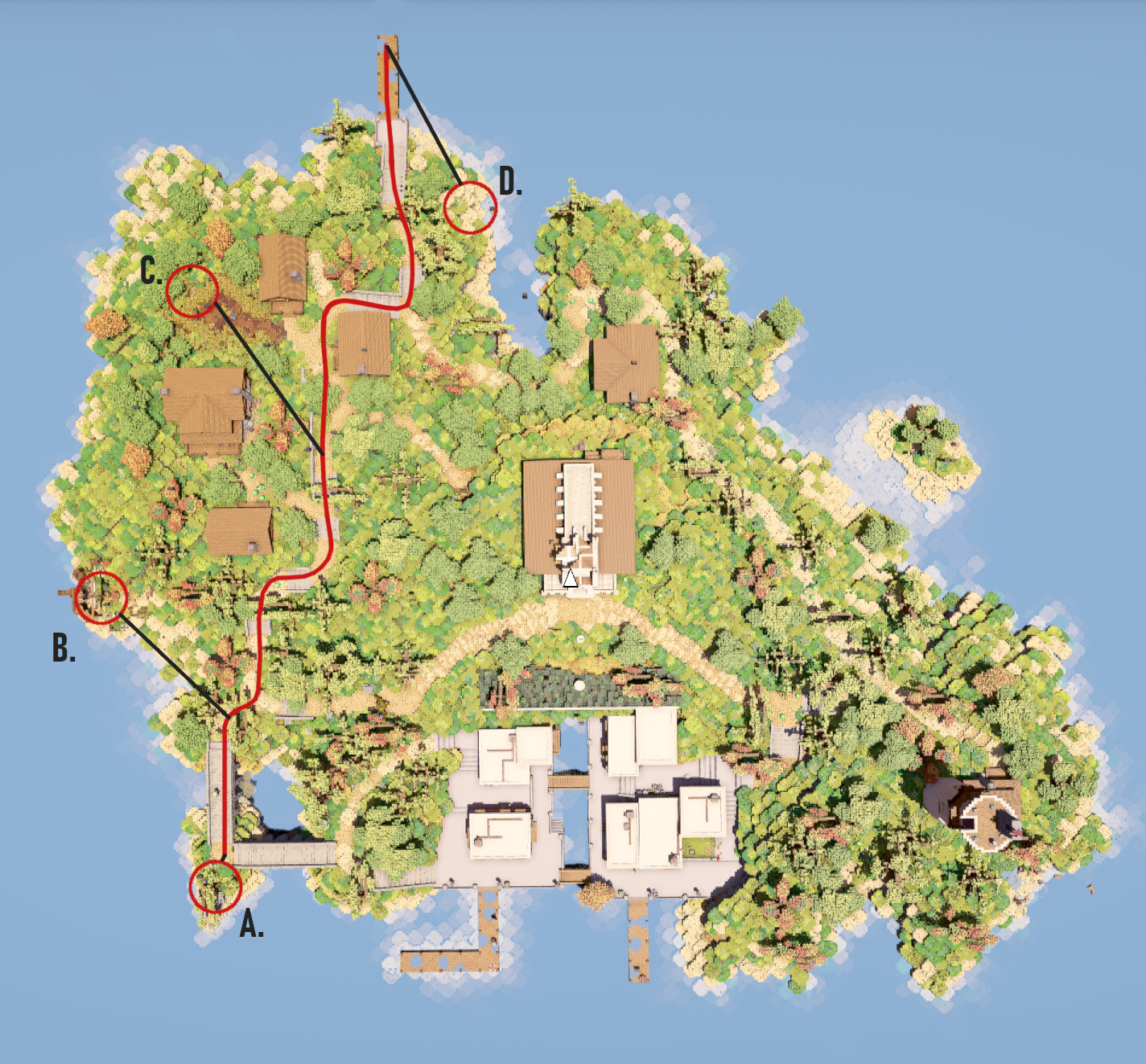
As a break from all the slaughter, and to illustrate the scope of our gameplay, I wrote a treasure hunt quest to take the player from Flotsam town, through Chaffmore Village, to the dock on the opposite side of the island.
A well-meaning child character has concocted a story about hidden treasure, and a list of tricky environmental riddles.
A. 'Where the bridges do meet. At the foot of a tree. A clue ye shall seek.'
C. "Where the houses are olden, and the field is
golden, a clue is beholden."
Quest: Kill The Ooze
The first quest given to the player sees them receive a pistol, a handful of ammunition and the task of killing around two dozen basic slime enemies around the town. I selected this to be the first quest for a number of reasons.
It opens with easy action - especially important for a demo level.
It orients the player with the starting area.
Shops
NPCs
Hidden Treasures
Narratively it suggests that the removal of Ooze from a given level is an important task. This holds true for the rest of the game.
The player completes the quest and learns that they need three ‘world cores’ to power the portal, and are pointed towards three other quest givers, which can be tackled in any order.
Quest: Kill the Ooze (again)
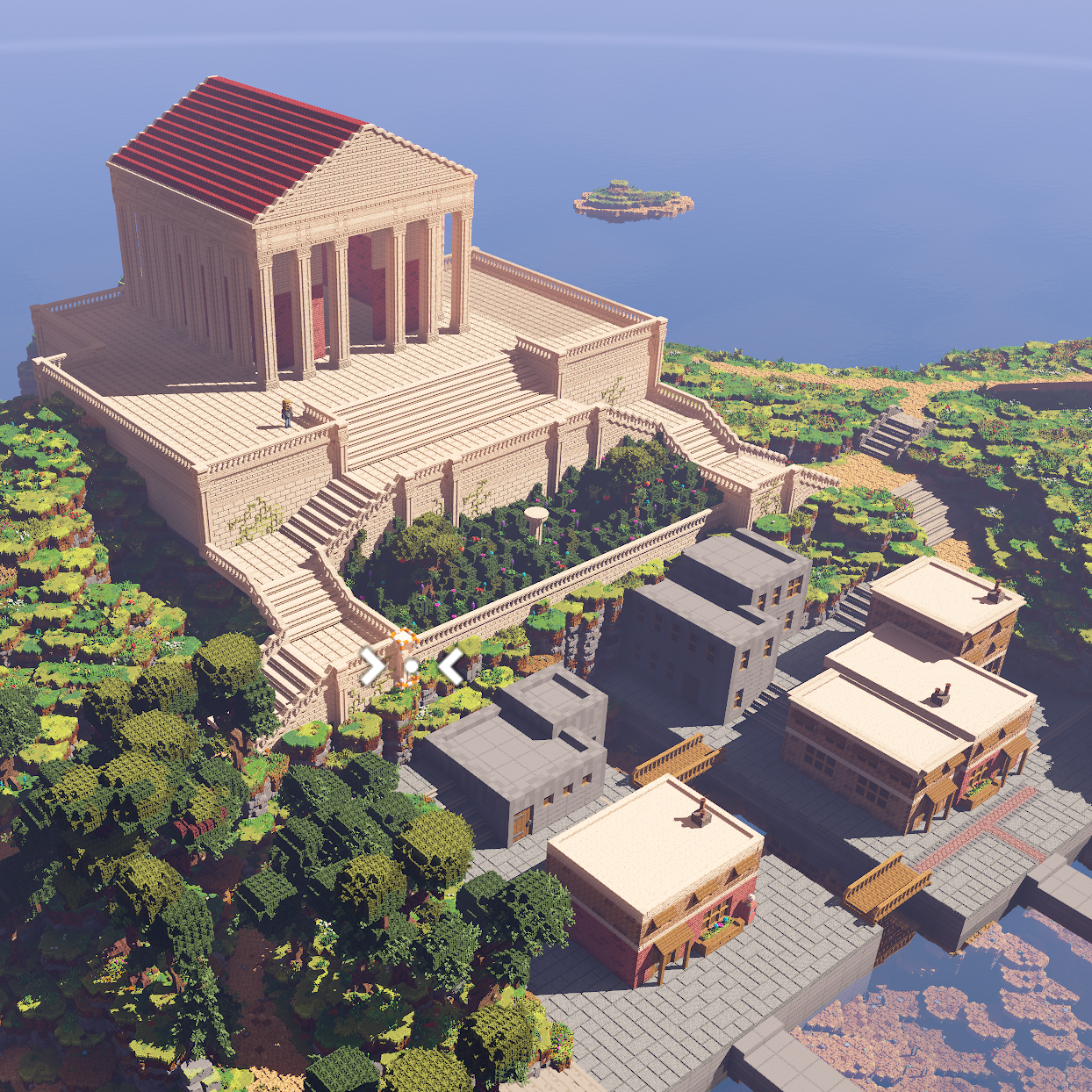
Hold on, didn’t we just do this? Almost. Now I introduce an element of creative problem solving. The player talks to the owner of the temple and learns that the Ooze from before has infested the catacombs below - but they can’t get in.
There are a number of ways the player may choose to get in to this area:
Follow the groundskeeper’s wild goose chase to find the key.
Or find the key on your own.
Meet the master thief Zazi who has found a weak side wall to blow open.
Or find the side wall on your own.
Destroy the floor of the Doma and drop down.
Discover the damaged wall in the sewer under the map, and climb up inside.
Of the non-exhaustive list above, the player is only explicitly pointed towards the groundkeeper. Everything else is a consequence of non-linear quest completion or exploration.
Once inside, we go back to combat gameplay; the player removes the Ooze infestation.
Quest: Byron’s Illegal Towels
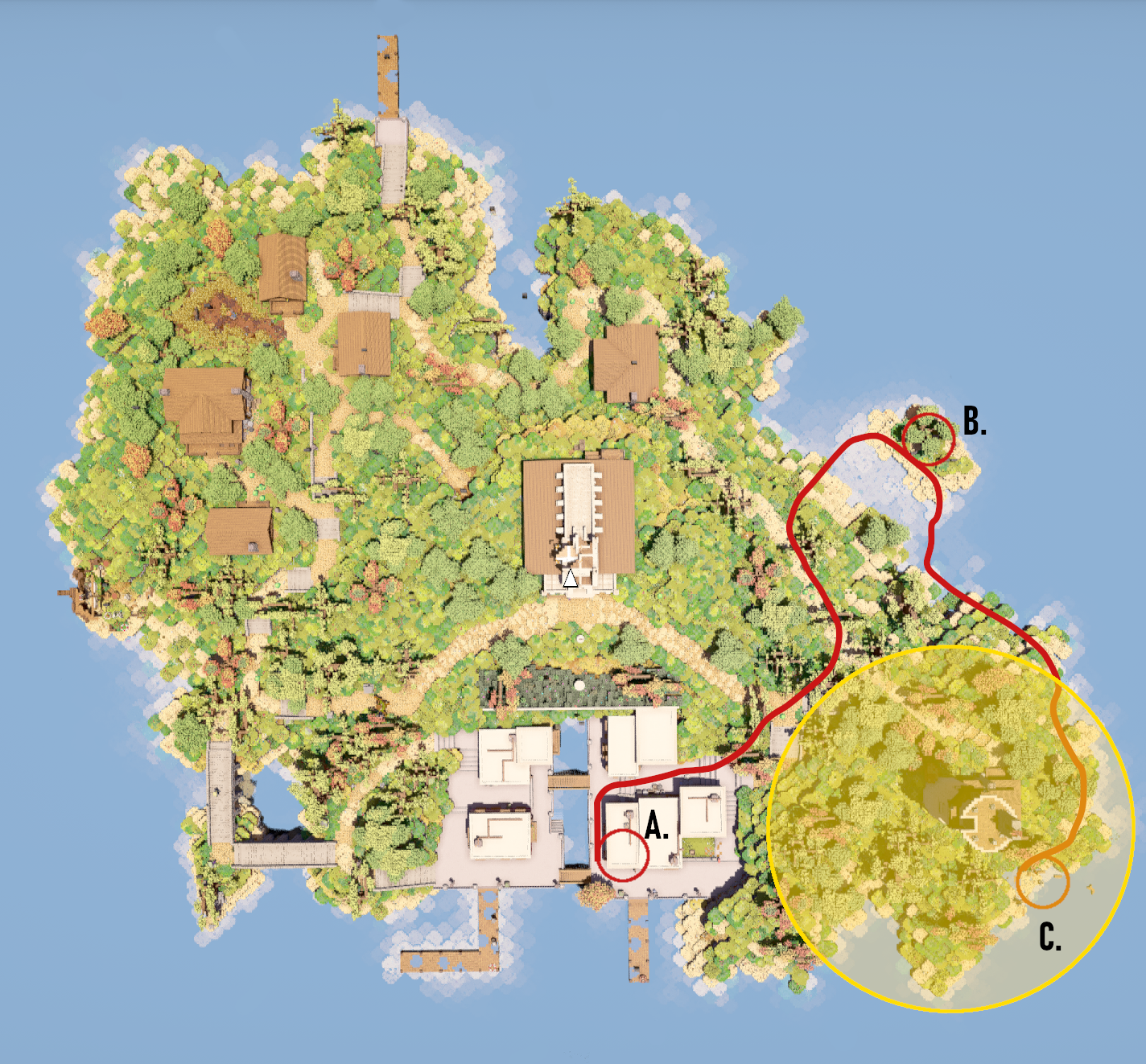
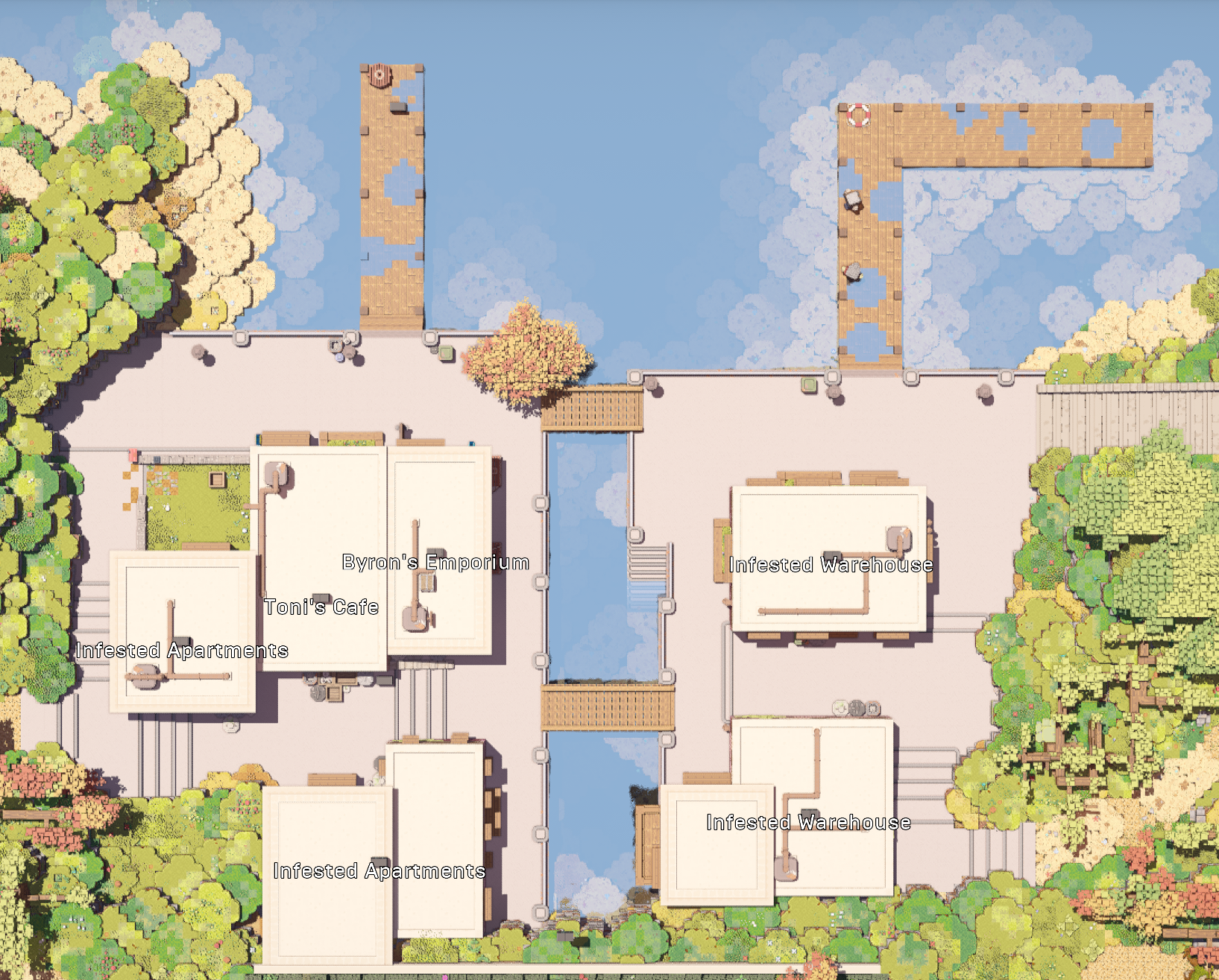
A quest with a mix of gameplay types. The player learns that a local shop owner is awaiting a shipment of illegal towels from a smuggler. He sends them from his store (at A.) to meet the supplier (at B.)
When they meet the supplier, he is flustered, alone and almost naked. His towels have washed up somewhere on the coast (in the yellow radius), kicking off a small treasure hunt.