Game Design
At Voxray games, we were encouraged to reach beyond our primary discipline(s), level design in my case, and contribute to discussions and decisions regarding the overall design of the game. In my tenure there, I personally worked on a number of far-reaching game design fields.
Environmental destructibility.
Procedural level generation (the same method used in Level Generator).
Character customization (covered in Voxel Art).
Environmental Destructibility
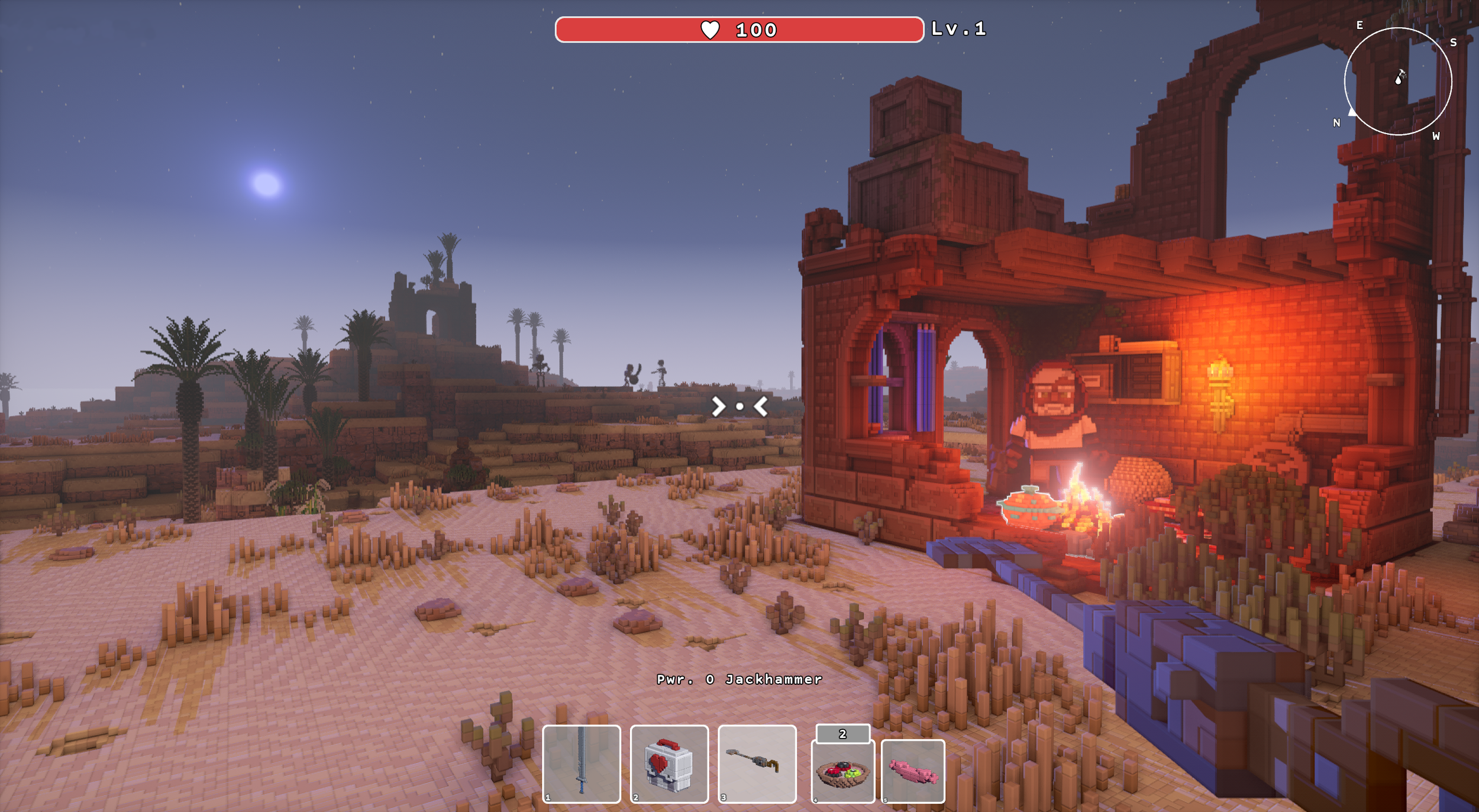
Destructible environments are a core tenet of Voxile. Whether throwing grenades into a Ooze-laden warehouse, using a high-powered sniper rifle to drop a crate on an unsuspecting foe, or using the jackhammer tool to extract materials from the world.
However, our environments tended towards being too destructible. Being able to demolish a house with a pistol, or dig through stone with a sword made the world feel papery. To this end, I proposed unhitching the destruction from a flat damage value, and instead taking into account the type of weapon dealing the damage. I did this through the following steps.
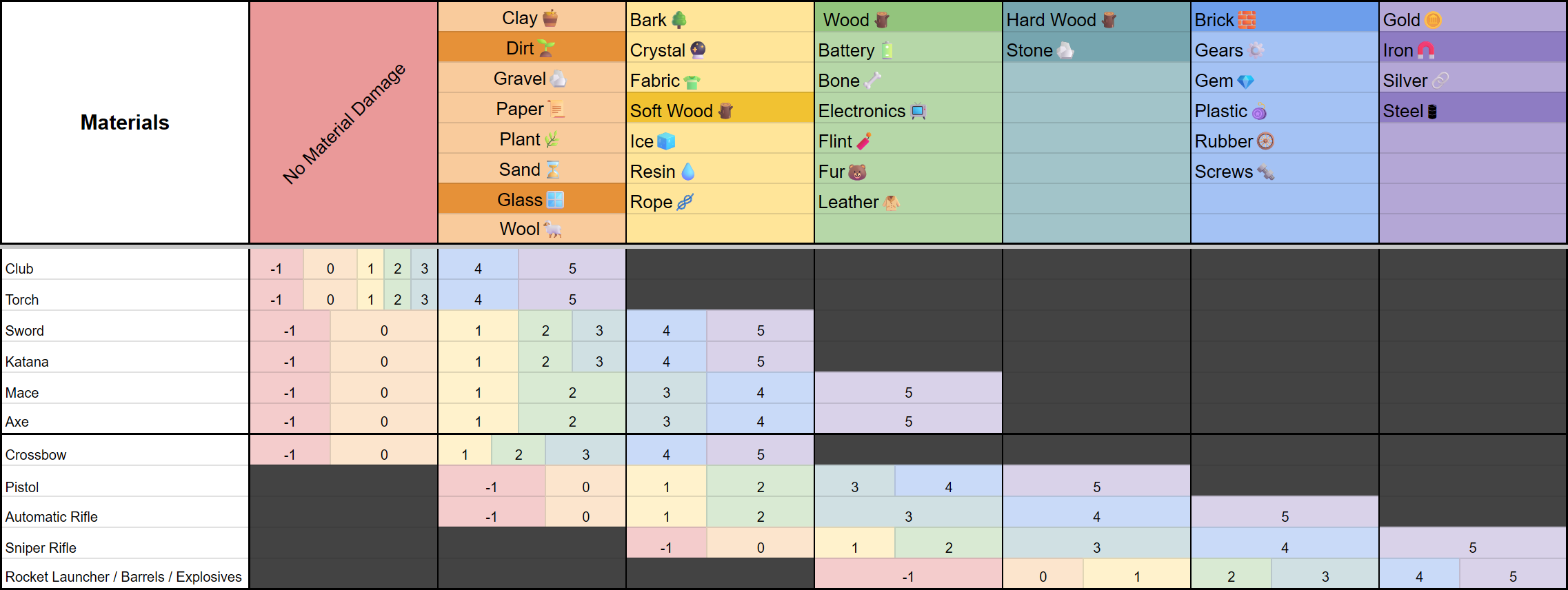
I took game’s main construction materials and rated them according to both rarity and perceived hardness (seen in the coloured columns at the top of the chart).
Even though, for example, stone and brick would be similarly hard, brick is rarer (and harder to craft) than stone, so carries a toughness ‘premium’.
The overall layout of materials here precisely lines up with the crafting and progression tree. This was important to maintain a sense of readability and clarity across all of our game systems.
Using the intended progression of weapons (taken from our survival gameplay framework), I attributed progressively greater destructive capability with more challenging weapons to obtain.
The outcome of this was that instead of being able to demolish an entire level with a very basic weapon, they gradually earned the ability to do so in line with the rest of the game’s progression.